CategoriesMarketing SEO

Why Local Citation Matters in Local SEO

Today’s digital competition makes it important for businesses to rank well in local searches. Whether you run a local store, provide services, or are starting a new venture, visibility in your area is crucial. One simple but powerful strategy that many businesses miss is Local Citation. Understanding its value in Local SEO can give your business a strong advantage.

What is Local Citation?

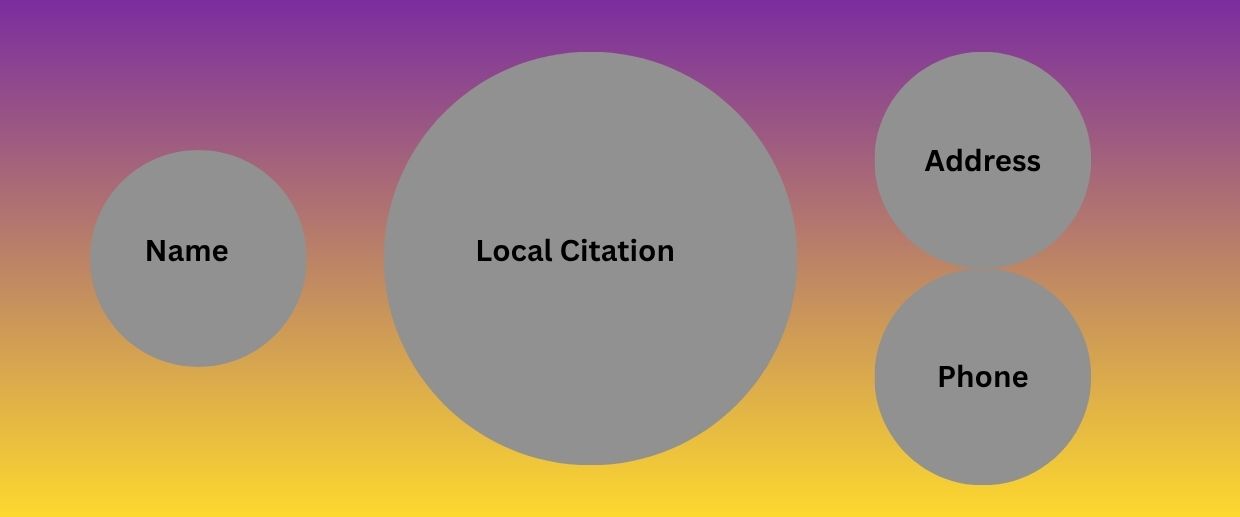
Local Citation refers to the presence of your business information on various online platforms, directories, and websites across the internet. This typically includes essential details such as your business name, address, and phone number, which help create a consistent identity for your brand online. When your business information appears on multiple trusted platforms, it becomes easier for search engines to recognize and validate your business as genuine and reliable.

Even if these listings do not include a direct link to your website, they still play a crucial role in improving your credibility and visibility in local search results. For example, when your business is listed on popular directories like Justdial or Sulekha, it strengthens your online presence and helps potential customers find your services more easily. This overall process is known as a Local Citation, and it is an important part of building trust and improving your local SEO performance.

Why is Local Citation Important in Local SEO?

1. Builds Trust and Credibility

Search engines like Google use data to show relevant search results to users. If your business’s data is consistent on various platforms, it builds trust. A strong Local Citation profile establishes that your business is legitimate.

2. Improves Local Search Rankings

One of the biggest advantages of Local Citation is the direct impact it has on improving your ranking. When you have a presence in various directories, you are perceived as being authoritative. This improves your chances of being included in the “Local Pack” (top 3 results on the Map).

3. Increases Online Visibility

The more directories you have a presence in, the higher the probability of being discovered by potential customers. Your Local Citation is essentially an opportunity for potential customers to discover your business. Even if they are not searching online via the three main search engines, they may be searching via the various directory platforms.

4. Drives Targeted Traffic

Your Local Citation has the power to drive highly targeted traffic to your website/business. When you have a presence in local directories, you are essentially targeting potential customers who are ready to take action. They may be calling you, visiting your store, etc.

5. Supports Google Business Profile Optimization

Your Local Listing is directly Appearance to your Google Business Profile. When you have consistent citations, you are essentially verifying your business. This improves your ranking.

Types of Local Citation

1. Structured Citations

These are present when your business details are listed on business listing sites with a structured format. An example would be IndiaMART.

2. Unstructured Citations

These occur when you are mentioned as a business entity on blogs, news sites, etc. This too qualifies as a Local Citation.

Best Practices for Local Citation

If you want to get the best out of your Local Listing strategy, you should follow these best practices:

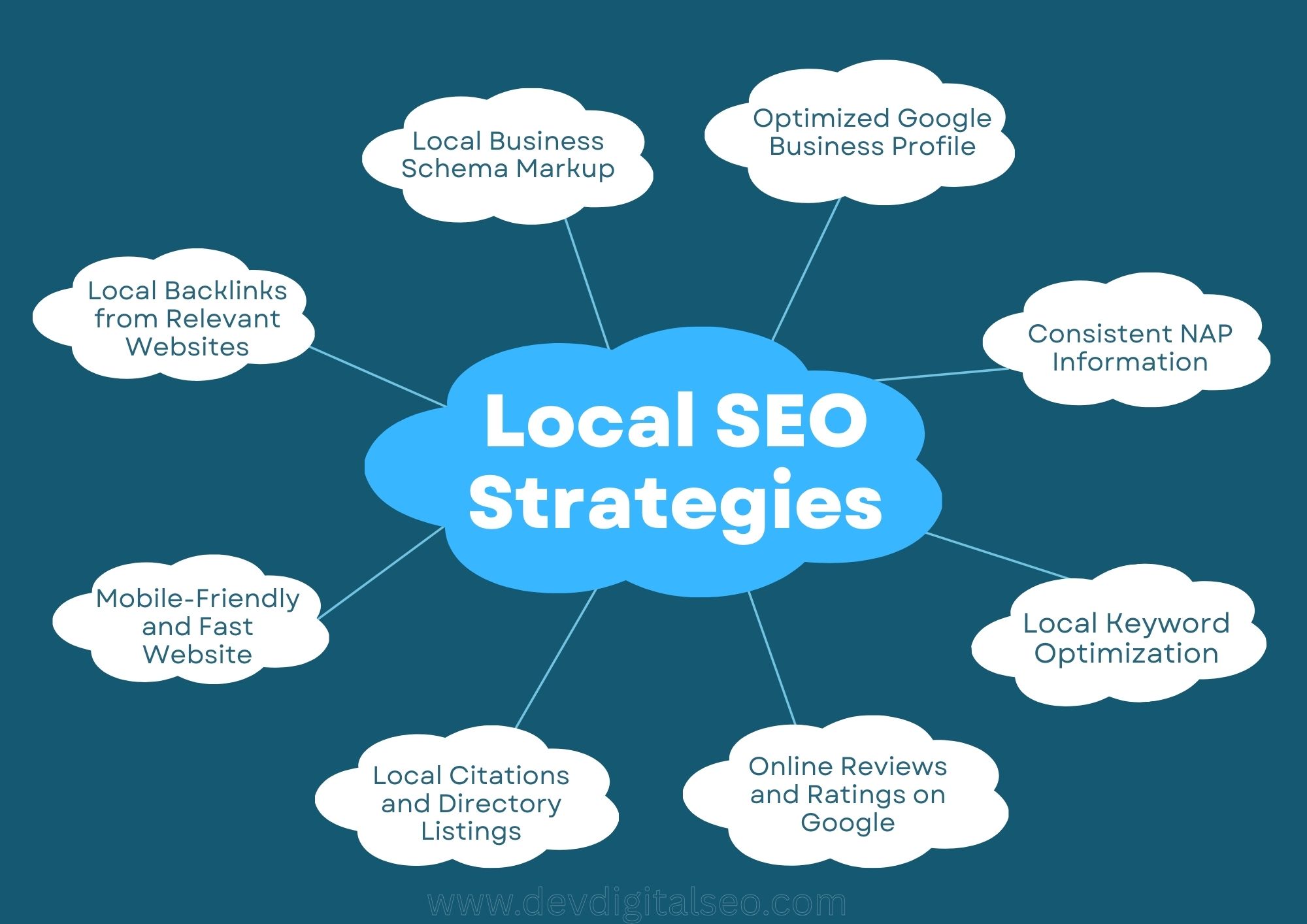
  • Consistent NAP – Your business name, location, and phone number should all match.
  • Choose Relevant Directories – Choose directories that are relevant for your business.
  • Update Your Details – Keep updating your details regularly.
  • Avoid Duplicate Listings – Duplicate citations can confuse the search engine and may affect rankings.
  • Add Your Business Details – Add website details, business timings, etc.

Common Mistakes to Avoid

There are many common mistakes that many businesses make while creating their Local Citation strategy:

  • Having different business names for different directories.
  • Entering incorrect business details.
  • Including low-quality directories.
  • Not updating old directories with new business details.

These are the common mistakes you should avoid for better Local SEO results.

Conclusion

Local Citation plays a key role in Local SEO and should never be overlooked. It helps search engines recognize, confirm, and rank your business more accurately. A well-planned Local Listing strategy not only boosts your rankings but also builds trust and improves your visibility among local customers. If you want to grow your business locally, start working on your Local Citation today. With consistent efforts, you’ll see clear improvements in your rankings and business growth.
 

CategoriesSEO UI/UX Design Web Development

Top E-commerce SEO Mistakes Beginners Can’t Ignore

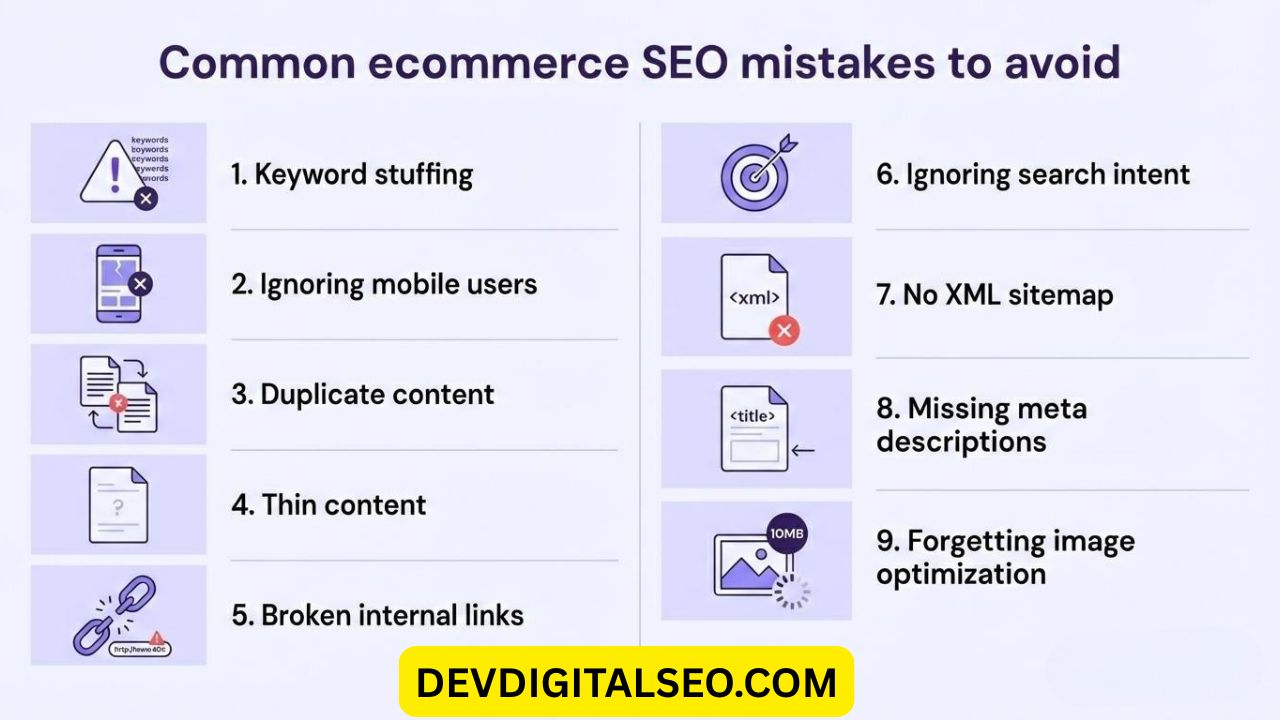
Starting an online store is one thing, but making it visible on Google is another level altogether. New store owners often get busy uploading products and creating ads while overlooking basic SEO fundamentals. Ignoring these can lead to serious E-commerce SEO mistakes that harm your growth. Even minor errors can impact your rankings. Here, we will discuss key E-commerce SEO mistakes that beginners must avoid.

1. Ignoring Keyword Research

One of the major Online store SEO mistakes is not conducting proper keyword research. Most online store owners simply do not bother to research what their customers might be looking for, while others do not bother to use tools to do so. If you do not use proper keywords, your products may not even show up in search results.

2. Poor Product Page Optimization

Another major E-commerce SEO Mistakes is not optimizing your product pages. Just adding your product name and price is not enough. There is much more to do.

  • Your product pages should have:
  • Optimized title tags
  • Product descriptions
  • Meta descriptions
  • Alt attributes
  • Proper internal links

3. Utilizing Duplicate Content

A common online store SEO mistake is relying on duplicate content. Many new retailers copy product information instead of creating their own.

This strategy fails to deliver results and can hurt your website’s performance.

By writing unique and valuable product descriptions, you can strengthen your SEO and increase conversion rates.

4. Lack of Technical SEO

Technical SEO is often overlooked by novice online retailers and is therefore included in this list of E-commerce SEO Mistakes.

Some of the most common technical issues faced by online retailers include:

  • Slow speed of your online business
  • Presence of broken links
  • No XML sitemap
  • Poor URL structure
  • No mobile-friendliness

Search engines favor online retailers with high speeds and user-friendliness.

5. Weak Site Structure

Improper website structure is another frequent online store SEO mistake made by beginners.

For better usability and improved search rankings, your site should have a clean and logical setup.

This includes a well-planned category hierarchy and a solid internal linking system.

6. Ignoring Mobile Optimization

Today’s online shopper uses a mobile device most often to browse and search online. Therefore, this is one of the most important Online store SEO mistakes that need correction.

Your website must be optimized for mobile devices by ensuring that it:

  • Is loaded quickly
  • Has a responsive design
  • Uses clear font and font sizes
  • Has a simple navigation system

7. Not Optimizing Category Pages

Beginners in online marketing often optimize product pages and forget about category pages. This is one of the most important yet hidden E-commerce SEO Mistakes.

Category pages must be optimized by including:

  • Keyword-rich headings
  • Some content
  • Internal links to product pages
  • Meta tags

These types of pages have a high probability of ranking for more general business-related keywords.

8. Ignoring Image Optimization

Large images that have not been compressed slow down your online business’s loading speed. This is one of the most important yet avoidable E-commerce SEO Mistakes.

Image optimization must be done by compressing images and using:

  • Keyword-rich alt text
  • Descriptive file names

9. Lack of Customer Reviews

User-generated content increases trust and boosts SEO ranking. Lack of attention to customer reviews is one of the strategic E-commerce SEO Mistakes that beginners often make.

Customer reviews provide content variety to product content and increase click-through rates in search engine results.

10. No Content Marketing Strategy

E-commerce sites that rely only on product content are making one of the biggest E-commerce SEO Mistakes.

Well-written content increases backlinks and authority in due course.


11. Poor Internal Linking

Poor internal linking is one of the most overlooked Online store SEO mistakes.

Internal linking increases crawl efficiency by linking related content within your site.

12. Not Tracking Performance

One of the most dangerous Online store SEO mistakes is not monitoring analytics. Without this, it’s impossible to get better.

Use tools such as:

  • Google Analytics
  • Google Search Console

These tools will be helpful in monitoring traffic and indexing issues.

Final Thoughts

By avoiding these E-commerce SEO Mistakes, your online business will be able to rank better in search engines. Many people starting out in online business may not take SEO as a serious aspect of online business. However, by constantly working on your online business’s optimization, you will be able to achieve long-term success.

By avoiding these Online store SEO mistakes, your online business will be able to compete well in the online marketplace.

If you need, I will be able to create a meta description and SEO title variations for this article.

CategoriesMarketing SEO UI/UX Design

Local SEO: The Hidden Reasons Why You’re Not Ranking in Local Search

If your business isn’t coming up in local searches, know that this is a problem that many small and medium businesses have. There are even businesses that have created a website, social media accounts, and maybe even have some reviews, that still do not get ranked. This is usually due to a poorly constructed Local SEO, or Local Search Engine Optimization.

Let’s take a deep dive and figure out what Local SEO is, and how to improve it.

1. Your Google Business Profile Is Not Fully Optimized

Missing Google Business Profile optimization is a huge reason why businesses nationwide fail in Local SEO Google Business Profile. Owners create listings and just forget to do the following:

  • Use relevant categories
  • Optimize category selection
  • Upload high-quality photos
  • Optimize business hours information
  • Add proper services and products 

Google rewards businesses that have and offer the most complete and updated prof

You will gain higher trust/ranking and visibility that results in more calls.

2.  Inconsistent NAP Information

NAP stands for Name, Address, and Phone Number. This is the most overlooked yet the most important thing to consider when doing your Local SEO. If your business information is different on social platforms, business directories, or your website, Google is going to get confused and not offer your business as a suggestion.

Here are some issues related to consistency and NAP that can hurt rankings:

  • Your website shows one phone number
  • Your Facebook page shows another
  • A local directory lists an old address

These inconsistencies hurt ranking. Be consistent with NAP across the web.

3. You’re Targeting the Wrong Keywords

Local businesses are trying to position themselves for keywords like to digital marketing or to digital marketing instead of to digital marketing agency in Southampton.

In local SEO, you have to think about the geography. If your keywords are without the name of your city, you are attempting to compete on a federal level rather than a local one. You can identify search phrases that include your service + location.

4. Weak On-Page Optimization

A good website will help, and good on-page organization will help support your local SEO.

Ensure that your site has:

  • Location-specific title tags
  • Meta descriptions with city names
  • Proper H1, H2 headings
  • Local schema markup
  • Embedded Google Map

Your service area and service descriptions should be on your homepage and service pages. Google must be clear about your location.

5. No Localized Content Strategy

If your site has been created with only generic service pages, you are missing a big opportunity. Local SEO is very powerful.

Create blog posts about:

  • Local events
  • Industry news in your city
  • Case studies of local clients
  • Area-specific service pages

This helps Google associate your business with your location and increases local authority.

6. Missing Customer Feedback or Poor Online Review Strategy

Local SEO reviews significantly impact search rankings due to Google’s frequency and quality review analysis.

If you have

  • Very few reviews
  • No recent reviews
  • Negative reviews without responses

Your ranking may suffer.

Encourage satisfied customers to leave reviews and always respond professionally. Active review management builds trust and improves visibility.

7. Poor Mobile Experience

Local searches are intended to be user friendly. Low Local SEO standards will occur due to unfriendly user websites. 

Usage problems that are common are as follows:

  • Slow loading speed
  • Hard-to-click buttons
  • Unreadable text
  • Broken layout

Use the Google PageSpeed program to resolve speed problems.

8.Weak Local Off-Page SEO Strategy

Most underlying ranking factors are referring to backlinks in Local SEO. However, Local backlinks are considered to be more valuable than broad range backlinks.

  • Local news websites
  • Business directories
  • Chamber of commerce websites
  • Local bloggers

Your scores will improve if you have higher quality backlinks instead of unfocused or low quality backlinks.

9. Poor Technical SEO Implementation

Local SEO efforts may be hindered by technical faults. Even with solid content, technical matters can obstruct indexing.

Look to see if there are:

  • Broken links
  • Duplicate content
  • Crawl errors
  • Missing SSL certificate
  • Incorrect redirects

Conducting technical audits will keep your site user-friendly.

10. Not Tracking Performance Properly

Because you can’t record failures, there is no way to improve or remedy the problem. A majority of businesses end up failing to succeed in Local SEO is because they do not record data.


Keep track of:

  • Keyword rankings
  • Website traffic
  • Google Business insights
  • Click-through rates
  • Calls and direction requests

Tracking helps to analyze if something is working well or not, so adjustments can be made. 

11. High Competition in Your Area

In some instances, the issue is not mistakes, but rather competitors. If your rival(s) have more reviews, more authority, & superior optimization, your Local SEO ranking will be lower. 

Analyze your competitors:

  • What keywords do they utilize? 
  • How many reviews do they have? 
  • How optimized is their profile? 

Utilize your competitors to gain a better analysis.

12. You’re Not Updating Your Profile Regularly

Google wants to see businesses that are active. If your profile has not been updated frequently, the posts are not updated, or the images are not updated, there will be a serious decline in your Local SEO performance.

You should post on your Google Business Profile:

  • Offers
  • Updates
  • Events
  • Announcements

Active interaction demonstrates reliability.

13. Website Structure

A confusing website structure makes it difficult for potential customers to navigate your website. For better Local SEO, your site structure should contain:

  • Clear navigation
  • Separate service pages
  • Location pages (if serving multiple cities)
  • Fast internal linking

The better your website structure, the better your website’s crawlability and your website’s conversion rate.

14. Ignoring Social Signals

Although social media is not a direct ranking factor, it does indirectly affect Local SEO and social media. Social media increases the visibility, engagement, and recognition of a brand. Social media access drives traffic to the brand recognition.

  • Match your NAP details
  • Include website links
  • Stay active with posts

  Social media presence only along with consistency increases the social media trust.

15. Expectation of Immediate Results

A big misconception is the expectation of immediate results. Local SEO is a long-term strategy. It requires a gradual improvement of rankings because of the increase of authority, trust, and engagement.

The key is Consistency:

  • Keep optimizing
  • Keep collecting reviews
  • Keep building backlinks
  • Keep publishing content

Your efforts will one day pay off.

Final Thoughts

Businesses frequently face budget constraints, making a well-planned strategy crucial. Local SEO requires patience, regular optimization, and consistent quality work. With time and the right approach, your online visibility strengthens. There’s no quick fix—only sustained, strategic action leads to better rankings, more store visits, and increased customer growth.

DevDigital SEO is a results-driven digital marketing agency offering SEO, link building, SMM, SMO, UI/UX design, and web development services. We help businesses grow online with smart strategies, higher rankings, and powerful web solutions tailored for success.

CategoriesMarketing SEO Web Development

Top Google My Business SEO Mistakes & Fixes: Local SEO

To get your business to show up in Google Maps and local search results, you need to optimize your Google Business Profile (previously Google My Business). A lot of businesses spend money on ads and websites, but they don’t fix little faults in their profiles that hurt their exposure without their knowing it. These blunders have a direct impact on your Local SEO, which decides if clients find you or your competition.

We will talk about the most common problems people make with their Google Business Profiles and how to repair them in this article.

1. Incomplete Business Profile Information

Several businesses neglect key information fields including descriptions, service listings, business hours, characteristics, and categories. Google rewards detailed and well-maintained profiles in Local SEO results. An incomplete profile suggests a lack of professionalism and proper setup.

✅ The Fix:

  • Fill in every section available.
  • Write a keyword-rich business description.
  • Add business hours (including holiday hours).
  • Add services and products clearly.
  • Select the most relevant primary and secondary categories.

A well-optimized listing improves discoverability and boosts customer confidence.

2. Wrong Primary Category Selection

Using an inaccurate or overly general primary classification.

Such as selecting “Marketing Agency” rather than “SEO Agency” if SEO is your main expertise.

The Fix: 

  • Choose the most specific primary category.
  • Add relevant secondary categories.
  • Research competitors ranking above you.

Choosing a category is one of the most important ranking factors in Local SEO.


3. Inconsistent NAP Information

Name, Address, and Phone Number are what NAP stands for.

❌ The Mistake: 

The contact information on the website is different from the other places.

  • Directories
  • Profiles on social media
  • Profile for Google Business

Google gets confused by inconsistent data, which makes people less likely to trust it.

The Fix:

Make sure NAP is the same everywhere.

  • Refresh old directories.
  • Always use the same format.

Being consistent makes your Local SEO more powerful.

4. Ignoring Customer Reviews

❌ The Mistake:

Not asking for reviews or not addressing to them.

One of the most important things for Local SEO is reviews.

The Fix:

  • Get reviews from happy consumers.
  • Answer every review,both positive and negative.
  • Use keywords in your answers in a natural way.

For example, “Thank you for choosing our digital marketing services in Delhi.”

Managing reviews actively creates trust and gets people more involved.

5. Using low-quality photos

❌ The Mistake:

Not uploading any photos or using low-quality ones.

Profiles with pictures attract a lot more clicks and requests for directions.

The Fix:

  • Upload professional photos.
  • Add team photos.
  • Add office images.
  • Add before-and-after results (if applicable)..

Regularly updated pictures make people more interested and help Local SEO work better.

6. Keyword Stuffing in Business Name

❌ The Mistake:

Adding more keywords, like: “ABC Digital Marketing | SEO Expert | Best Agency | Google Ads Specialist,”

This goes against Google’s rules and could get you banned.

The Fix: 

Only use your legal business name.

Improve keywords in:

  • Description
  • Services part
  • Posts
  • Website content

Long-term Local SEO stability is better with clean branding.

7. Not Posting Regular Updates

❌ The Mistake:

Missing to Google Posts.

You can share offers on Google Posts.

  • Offers
  • Updates
  • Blogs
  • Events
  • Announcements

Outdated profiles can harm online visibility and engagement.

The Fix:

Post once a week: 

  • Service updates
  • Case studies
  • Promotions
  • Blog highlights

Posting regularly shows that you are active and helps with Local SEO engagement.

8. Ignoring Q&A Section

❌ The Mistake:

Not answering questions in the Q&A portion.

People can ask and answer questions about your business.

The Fix:

  • Add your own FAQs.
  • Answer questions professionally.
  • Monitor regularly.

Optimized Q&A makes keywords more relevant and makes Local SEO more visible.

9. Lack of technical SEO

Your Google Business Profile has a link to your website.

❌ The Error:

Sending traffic to: 

  • Slow websites
  • Non-mobile-friendly pages
  • Pages without clear CTAs

This makes the bounce rate go up and the ranking potential go down.

✅ The Fix:

  • Optimize website speed.
  • Ensure mobile responsiveness.
  • Add clear contact options.
  • Create location-specific landing pages.

Strong website optimization helps Local SEO flourish as a whole.

10. Not Tracking Performance

❌ The Mistake

Not looking at the insights data.

You can keep track of:

  • Profile views
  • Calls
  • Direction requests
  • Website clicks

You can’t improve your plan without tracking.

The Fix

  • Identify which posts drive the most engagement.
  • Track keyword rankings consistently..
  • Regularly monitor keyword ranking fluctuations.

Making decisions based on data always leads to better Local SEO outcomes.

Bonus Mistake: Not Making Local Backlinks

You won’t rank high even if your profile is great if you don’t have authority.

❌ The Mistake

Not creating links in your area.

The Fix

Get your name in local directories.

  • Get links back from local bloggers.
  • Work together with businesses in your area.
  • Help pay for events in your area.

Authority signals make your Local SEO stronger.

Last Thoughts

Your Google Business Profile is more than simply a listing; it’s a great way to get leads. Small mistakes might make you less visible, get fewer calls, and lose business.

In short:

  • Fill out your profile completely.
  • Choose the right categories.
  • Keep NAP consistent.
  • Get reviews and answer them.
  • Post regularly.
  • Avoid keyword stuffing.
  • Optimize your website.
  • Build local authority.

Your Google Business Profile is the most important part of your Local SEO plan. If you do it right, it will help you get to the top of local search results.

If you work on correcting these problems, you’ll not only move up in the rankings, but you’ll also get more calls, leads, and genuine company growth.

CategoriesDesign Marketing SEO Web Development

Common Local SEO Mistakes Small Businesses Make

Local SEO is a powerful tool that helps small businesses get better results from their online marketing. No matter if you own a bakery, dental office, coaching center, or marketing agency, people are constantly searching for nearby services. If your business is missing from local search listings, you are losing customers to competitors.

Unfortunately, many owners make critical Local SEO Mistakes without even realizing it, which affects their Google rankings. In this article, we highlighted the most common Local SEO Mistakes and shared practical ways to fix them to boost your traffic, leads, and online presence.

1. Ignoring Google Business Profile Best Practices

Failing to manage and optimize a Google Business Profile properly is one of the major Local SEO Mistakes small businesses commit. Either the profile remains unclaimed or it is only partially completed, limiting its effectiveness.

  • Exact business name
  • Accurate contact information (address and phone)
  • Updated working hours
  • High-resolution images
  • Proper category selection
  • Well-written service details

One of the worst Local SEO mistakes is having an inadequate or out-of-date profile. This is because Google uses this information a lot to rank your business locally.

2. Incorrect or Inconsistent NAP Information

In local SEO, NAP means Name, Address, and Phone number. One of the serious Local SEO Mistakes businesses make is publishing mismatched NAP details across websites, directories, and social media accounts.

For instance, if your business address is written differently in multiple places, Google may not trust the information fully. This inconsistency weakens your authority and affects rankings.

To fix this Local SEO Mistakes problem, maintain identical business details on every platform.

3. Weak Local Keyword Strategy

Small businesses often target generic keywords while overlooking geo-targeted phrases. This oversight is among the frequent Local SEO Mistakes that prevent them from ranking in local results.

For instance:

  • Instead of “digital marketing services,” say “digital marketing services in Southampton.”
  • Use “SEO agency in Mumbai” instead of “SEO agency.”

One of the most important Local SEO Mistakes that keeps your website from showing up in local searches is not incorporating city, area, or region names in your content.

4. Skipping Local Landing Pages

If you service more than one area, you need separate landing pages for each one. Making only one generic service page is one of the major Local SEO Mistakes that keeps you from growing.

For instance:

  • /seo-services-london
  • /seo-services-manchester
  • /seo-services-birmingham

If you don’t have pages for each city, you’re making local SEO Mistakes that make it less likely that you’ll rank well in other locations.

5. Neglecting Customer Feedback

Reviews on the internet are very important for local rankings. Not asking clients to submit reviews is one of the worst things you can do for Local SEO.

Google thinks about:

Look at the number of reviews:

  • Review quantity
  • Review quality
  • Review frequency
  • Owner responses

One of the worst things you can do for your local SEO is to ignore reviews, especially if your competitors are actively collecting and responding to them.

Always ask pleased customers for evaluations and reply professionally to both good and bad feedback.

6. Ignoring Mobile-Friendly Design

Most searches for things in your area are done on mobile devices. You are making big Local SEO mistakes if your website is slow or not mobile-friendly.

Your website needs to:

  • Load in less than three seconds
  • Be able to respond on all devices
  • Make it easy to get around
  • Add buttons that let people call you

One of the most prevalent Local SEO Mistakes that turns away potential clients is a bad mobile experience.

7. Poor Local Content Strategy

Publishing general blog posts without a local angle is another example of Local SEO Mistakes.

  • Instead of saying “Advantages of Hiring an SEO Agency,”
  • “Why SEO Services Are Important for Small Businesses in Southampton”

Localized content helps you avoid Local SEO Mistakes that come from getting traffic that isn’t appropriate to your area.

8. Weak Local Citation Strategy

Local citations are when your business is listed on directories and listing sites. One of the most common Local SEO mistakes small businesses make is not building citations.

You should put your business on:

Directories in your area

  • Directories for specific industries
  • Websites for Chambers of Commerce
  • Listing sites you can trust

If you don’t use citations, you’re making the same Local SEO Mistakes that hurt your local authority.

9. Weak Local Backlink Profiles

Getting links from local websites makes you look more trustworthy. A lot of firms just pay attention to general backlinks, which is one of the most common Local SEO mistakes.

Get links from:

  • Local blogs
  • Websites for local news
  • Groups in the community
  • Pages for sponsoring events

Not creating links in your area is one of the Local SEO Mistakes that might slow down your development and keep you from growing.

10. Failing to Use Structured Data

Schema markup makes it easier for search engines to grasp information about your business. One of the technical Local SEO Mistakes is not paying attention to structured data.

Adding local business schema can make things better:

  • Search visibility
  • Rich snippets
  • Rates of click-through

This is one of the quiet but important Local SEO Mistakes that many small businesses make.

11. Confusing Site Navigation

You are making structural Local SEO mistakes if your website is hard to use or doesn’t have clear service pages.

Ensure:

  • Clear service groups
  • Simple to use
  • Linking correctly throughout the site
  • Optimized meta descriptions and title tags

A disorganized website structure is one of the Local SEO Mistakes that may be avoided and that hurts both users and rankings.

12. Ignoring Local SEO Analytics

Another big problem with Local SEO is not keeping track of results. You can’t get better if you don’t keep an eye on performance.

Use tools like these:

  • Google Analytics
  • Google Search Console

Tracking helps you find and repair Local SEO mistakes before they do damage that lasts a long time.

Conclusion: Local SEO Mistake

Local SEO has the power to reshape a small business by boosting discoverability, leads, and revenue, yet ignoring even one Local SEO Mistake can limit results, especially when problems such as incomplete Google Business Profile optimization, inconsistent NAP information, weak mobile usability, poor content strategy, or lack of backlinks exist; by identifying and correcting every Local SEO Mistake step by step, you improve rankings, enhance credibility, and create sustainable business growth.

CategoriesWeb Development Design SEO UI/UX Design

The Main Characteristics of Static and Dynamic Websites

India is undergoing rapid digital growth; here an online presence is now essential, not optional. Web developers, startup founders, bloggers, small business owners, and aspiring IT professionals frequently seek clarity on the static websites and dynamic websites difference and which solution fits their requirements best.

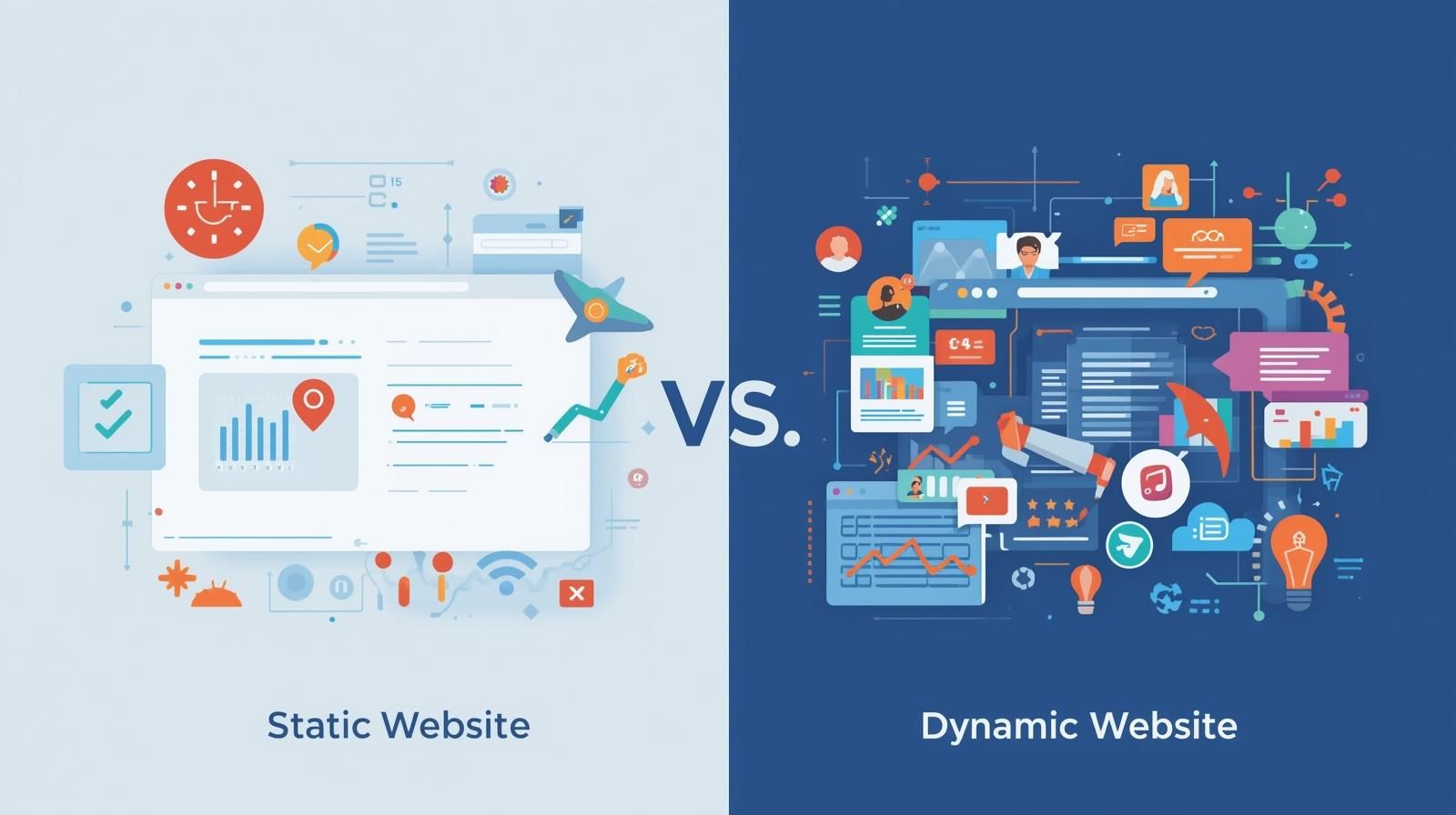
Understanding the static website vs dynamic website difference is crucial for anyone building a website in today’s competitive digital landscape. This article explains the core characteristics of static and dynamic websites in easy-to-understand terms, using practical examples relevant to Indian users.

After reading this article, you will clearly understand the differences between static websites and dynamic websites, along with their benefits, limitations, and practical use cases, making it easier to choose the right website type for your future goals.

What Is a Static Website?

A static website is the most basic type of website. A static website consists of static web pages created using the web design coding languages of HTML, CSS, and, sometimes, JavaScript. Each page is saved as a separate file on the web server, and the page does not change, no matter how many times a single visitor refreshes the page.

When comparing static websites and dynamic websites, static websites are usually the first websites that beginner web developers create.

Features of Static Websites  

  • Fixed Content  

The content is the same no matter when the website is visited. Only when the developer makes changes to the code is the website able to be altered. For instance, a basic portfolio website for a freelancer in India lists their skills and contact information.  

  • Basic Technology Stack  

Static websites are built with only HTML, CSS, and some JavaScript. There is no storage system needed.  

  • Fast Loading Speed

Static websites have no back-end processing, therefore loading is at an optimal level. This is even true for websites with back-end processing when using slower data connections in places such as India.  

  • Low Hosting Costs  

Static websites are cheaper to host, thus are ideal for sites that are hosted on free or shared hosting sites.  

  • High Security  

With fewer elements, there are fewer points of weakness. This is especially true when considering the differences between a static website and a dynamic website.  

What Is a Dynamic Website?  

Websites that are more advanced in comparison to static websites are the ones able to alter and adjust content based on time, location, user interactions, or data recorded within databases. Websites that are known to be in this category are news sites, social media sites, and e-commerce sites.  

Key Traits of Dynamic Websites  

  • Database-Driven Content 

Database systems such as MySQL or MongoDB are used to hold content that is then pulled in a dynamic way.  

  • Server-Side Programming  

Languages such as PHP, Python, Node.js, or ASP.NET are the preferred choices for content generation.

  • User Engagement

User engagement features such as log-in systems, comments, dashboards, and real-time updates.

  • Customized Engagement

Users can have customized viewing preferences, as is the case with online learning platforms, which are widely adopted in India.

  • Scalability

Dynamic websites are flexible and can easily expand by adding more pages and features rather than by rewriting the code.

Key Differences Between Static and Dynamic Websites

The differences between static websites and dynamic websites become clear when we look at them side by side.

1. Content Management

  • Static Website

Manual intervention in the code determines when the content is changed.

  • Dynamic Website

Admin panels or Content Management Systems (CMS) enable content updates.

This is often a key factor in the static website vs dynamic website conversation.

2. Development Difficulty

  • Static Website

Simple to build and best suited for beginners, such as students in India, who are starting to learn web development.

  • Dynamic Website

Backend knowledge and the understanding of databases and server-side logic are required.

3. Speed

  • Static Website

Quicker loading speeds.

  • Dynamic Website

There are slight delays because of server-side processing, although current improvements are beneficial.

In the static website vs dynamic website conversation, speed is usually in favor of static websites.

4. Financial Considerations

  • Static Website

Development and maintenance costs are low.

  • Dynamic Website

Development time, hosting, and maintenance costs are high.

This difference in cost is significant for small businesses in India.

5. SEO Capabilities

  • Static Website:  

Good SEO performance is provided if the content is optimized.  

  • Dynamic Website:  

Strong SEO potential with the use of automation and content scaling.  

For SEO, the performance of static website vs dynamic website is a differentiating factor.

Use Cases in the Indian Context

To summarize the information on static website vs dynamic website, let us analyze a few practical use cases.

When A Static Website Is Ideal

  • Personal portfolio for freshers
  • Small business landing pages
  • Local service providers (electricians/tutors/consultants)
  • Event promotion pages

To save money, many of India’s new startups use static websites, thereby making static websites and dynamic websites the more practical choice.

When A Dynamic Website Is Ideal

  • E-commerce
  • Job portals
  • Online education
  • News and blogging

Large dynamic websites serve the Indian market due to the versatility they offer.

Advantages of Static Websites

When comparing static websites and dynamic websites, the advantages of static websites include:  

  • Reduced development costs
  • Increased security
  • Reduced costs
  • Faster performance
  • Simpler development
  • Simplified deployment 

For beginners and small businesses in India, these advantages make static websites a good choice.

Static Websites Limitations

  • No real-time updates
  • Manual content changes are needed to update the website
  • Limited interactivity on the website  

Because of the long list of disadvantages with static websites, most developers turn towards dynamic build solutions. 

Dynamic websites Limitations

  • More expensive to develop
  • Needs regular updates and upkeep
  • Higher risk of security breaches if not managed correctly

These points should be carefully evaluated when comparing static and dynamic websites.

Static Website vs Dynamic Website for Career Growth

An increasing number of students in India aspiring to enter the IT sector need to understand the differences between static websites and dynamic websites as a core part of their learning.

  • Start with static websites to build a strong foundation in HTML, CSS, and basic JavaScript for front-end web development.
  • Move to dynamic websites to gain skills in backend programming, databases, and scalable frameworks.

This strategy helps individuals make informed decisions in India’s competitive job market.

Which One Should You Choose?

When comparing static websites vs. dynamic websites, the final choice depends on:

  • Website objectives and goals
  • Project budget
  • Must-have features
  • Level of technical knowledge
  • Goals for long-term expansion

For a fast and secure online presence, go with a static website.

If your project requires advanced features and scalability, choosing a dynamic website is the smarter decision.

What Defines A High Quality SEO Service

Conclusion

Before entering into any technical domain, it is important to understand the core concepts of static and dynamic websites. The comparison between static websites and dynamic websites is not about which is better, but instead, which one is better for you.  With the rapid digital advancement of the country, both static and dynamic websites are equally important for the digital ecosystem. Understanding the differences will help you make better and informed technical and career-related decisions. 

The knowledge of dynamic and static websites will set you apart in the digital world, whether you are a student, a businessman, or a developing aspirant.

CategoriesSEO Marketing UI/UX Design

What defines a high-quality SEO service?

Modern businesses need more than just an online presence to succeed in today’s competitive digital environment. Quality SEO services help brands stand out, attract the right audience, and drive consistent growth over time. While some agencies focus on quick ranking wins, those results rarely last. Sustainable, long-term success comes from well-planned strategies built on strong foundations, ethical practices, and a clear understanding of how search engines and users interact with your website.

Quality SEO isn’t just about rankings. It’s built on smart planning, honest execution, transparency, and the ability to adapt in an ever-changing digital environment.

To break it down.

SEO Fundamentals

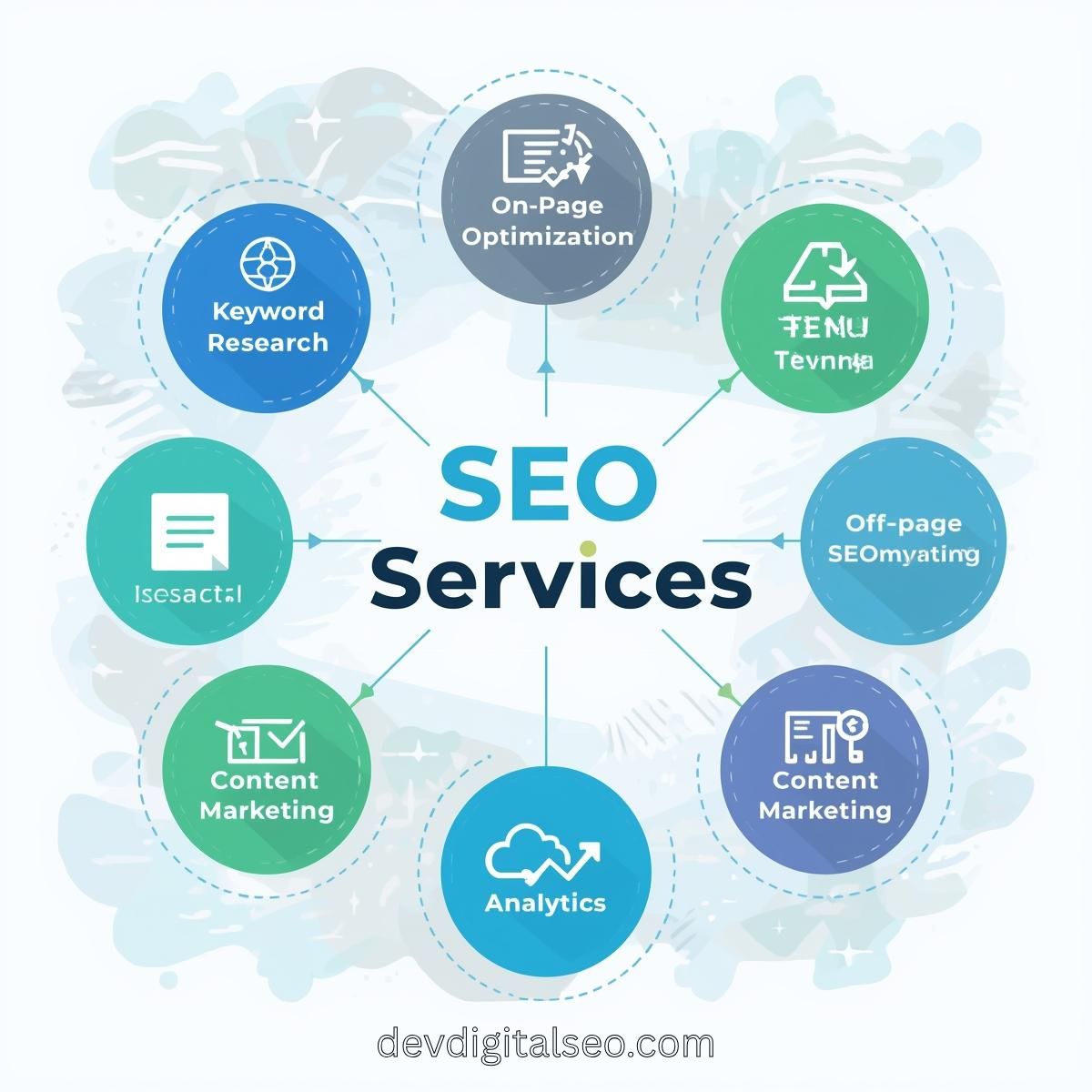
In simple language, SEO helps search engines properly index your website while improving how users interact with it. Effective SEO services start with strong fundamentals such as technical performance, on-page clarity, and off-page credibility. Without a solid foundation, additional tactics won’t deliver lasting results. Quality SEO rejects shortcuts and prioritizes long-term visibility, sustainable growth, and consistent outcomes that align with genuine business goals.

On-Page Optimization 

On-page optimization is one of the most important components to having business quality SEO Services. On-page optimization is when everything search engine and users see on your website is structured and optimized.

Good on-page optimization consists of:

  • Finding the right keywords and using them the right way
  • Title Tags and Meta Descriptions that are optimized
  • Clear heading structures (H1, H2, H3)
  • Better URL structures
  • Links to other pages on your site to help crawlers
  • Content that is high in quality and is helpful to your site visitors to read

Good content never feels stuffed with keywords. Professionals know how to blend relevance with readability to create meaningful pages. On-page optimization ensures users find value quickly while search engines understand the content clearly.

Off-Page SEO

While on-page builds relevance, off-page builds authority of your website.

The best SEO services will focus on Off-Page SEO that is white hat and ethical:

  • Getting backlinks from relevant and trustworthy websites
  • Digital PR and Brand mentions
  • Outreach for relationship building and content
  • Social signals that support visibility

Risky shortcuts and low-quality links hurt long-term performance. Professional services focus on reputation-driven growth, where authority and trust matter more than numbers. This strategy delivers dependable and penalty-free results.

Data-Driven Keyword Strategy

The best SEO starts with good Keyword research. No guessing.

A high-quality SEO service:

  • Identifies keywords with real search intent
  • Targets a mix of short-tail and long-tail keywords
  • Aligns keywords with business goals, not just traffic

Keyword research and analysis should support real business goals, not just higher traffic numbers.Smart optimization focuses on outcome-driven keywords that generate leads and sales. This approach ensures every action supports real growth rather than surface-level visibility.

Site Optimization

Even if users don’t notice it, a website’s technical structure plays a critical role in performance and growth.

The best SEO Services ensure:

  • Fast site speed.
  • Proper site mobile-responsiveness.
  • Tight site security and proper use of HTTPS.
  • Site architecture that is clean and easy to navigate.
  • Proper site indexing and crawlability.
  • A clean site free of broken links, dead pages, and site errors.

Strong technical health is essential for performance. Quality providers monitor, improve, and fix technical elements continuously to ensure lasting results.

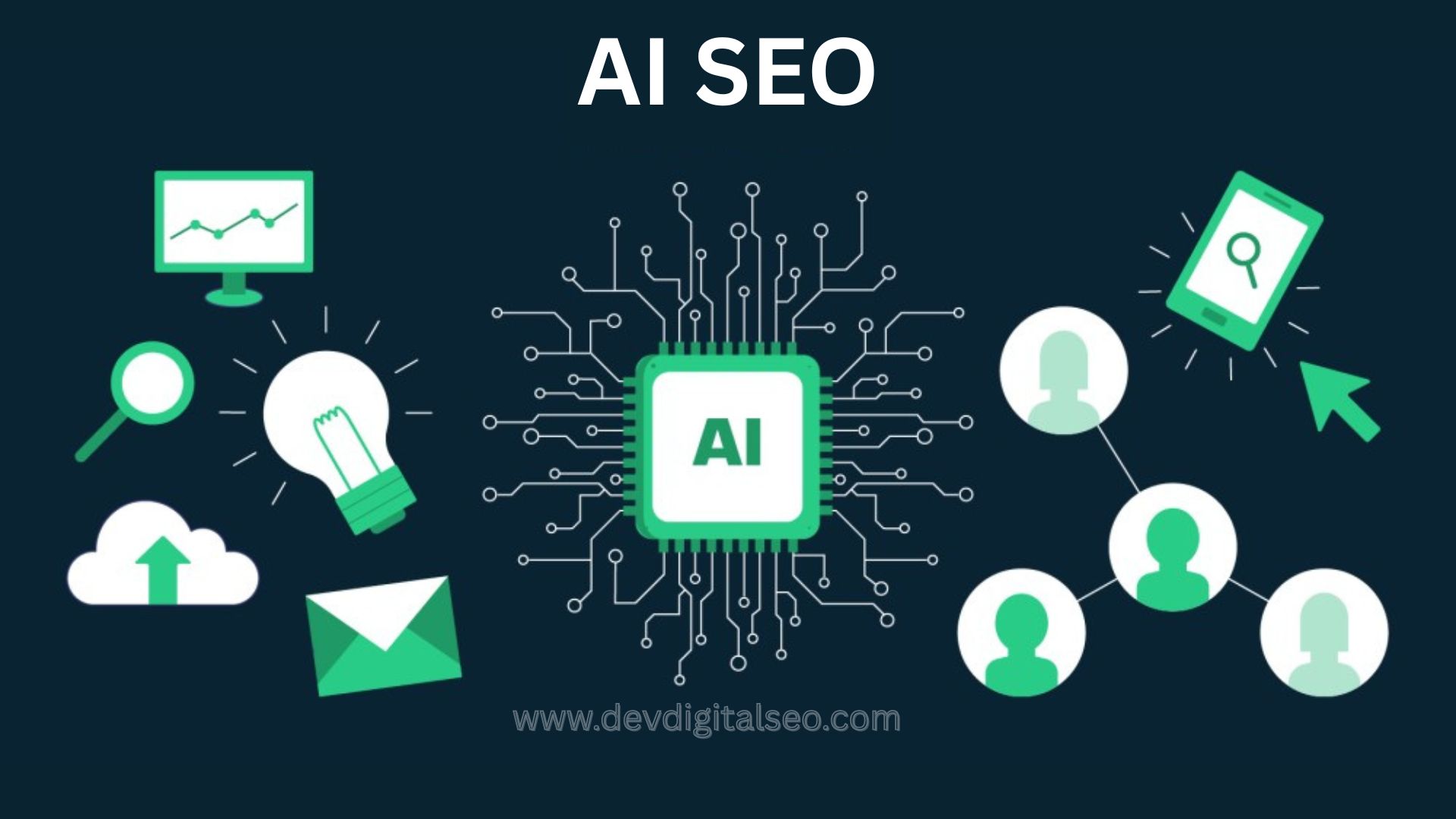
AI SEO

Today, Rapid SEO Innovations include Artificial Intelligence (AI) tools in increasing measure.

I high-quality SEO Service selected the following AI tools to:

  • Evaluate user behavior and search patterns.
  • Enhance optimization of content keyword intent and relevance.
  • Optimize site content and structure for AI supercharged Google algorithms.
  • Enhance predictive keyword optimization for target audiences.
  • Automate performance analysis for driving goals.

AI NEVER replaces a Human Strategist- it augments the Human. The finest SEO services harness the AI and blend it with human ingenuity and experience for outstanding performance.

User-Friendly Content

One of the biggest signs of a high-quality SEO service is content quality.

Great SEO content:

  • Solves real user problems
  • Is easy to read and engaging
  • Builds trust and authority
  • Answers search intent clearly

Trustworthiness is the content quality that search engines reward the most. When considering the content of a website, a quality SEO service knows that content is there not just to rank the website, but to rank the relationships to the users.

Transparent Reporting

SEO is not magic, It’s quantifiable.

A high quality SEO service will provide:

  • Keyword ranking updates
  • Traffic and conversion insights
  • Honest explanations of what’s working and what’s not

Regular reporting builds trust, while silence signals risk. Good providers take the lead, share progress openly, and avoid committing to results that aren’t achievable.

Continuous Optimization and Adaptability

High-quality SEO services:


  •  Stay updated with Google algorithm changes
  • Continuously refine on-page and off-page strategies
  • Adapt content and AI SEO techniques
  • Focus on long-term sustainability

SEO is not a one time thing, it’s a perpetual thing. The best SEO providers are the ones that can read the winds of change and are able to adapt.

ROI-Focused SEO

SEO should work as a growth engine for your business, not a separate process. Strong SEO services are built around your business objectives:

  • Brand positioning
  • Marketing campaigns
  • Sales funnels
  • User journey optimization

Quality SEO should connect search performance to business goals, whether it’s leads, sales, or visibility for the brand. 

How Can AI Improve SEO For Small Businesses?

Conclusion

Good SEO isn’t about shortcuts or quick fixes. It’s built on strong strategy, ethical practices, skilled execution, and transparent communication. By balancing on-page and off-page efforts and using AI wisely, it always puts users first. The real goal is sustainable growth, lasting visibility, and measurable results that genuinely support long-term business success.

DevdigitalSEO is where you get SEO services focused on long-term success, rather than quick wins.

CategoriesUI/UX Design Design Marketing SEO

Why Are Website Maintenance Services Are Essential for Better Performance?

Your Website Is an Ongoing Asset, Not a One-Time Project. Website Maintenance Services help keep your site running smoothly, protecting it from technical issues, security threats, and performance slowdowns that can affect user experience and growth.

Websites that are consistently updated and optimized get a lot of attention from users and search engines. Website Maintenance Services help drive long-term growth by optimizing performance, preserving SEO strength, and keeping your site competitive.

Website Safety & Reliability

Outdated websites face many serious security issues in today’s web ecosystem. Hackers take advantage of outdated plugins and themes. Professional website maintenance services optimize (context-dependent) these risks with ongoing security updates, malware scans, and data protection measures.

A secure website keeps your data safe and builds customer trust. Regular monitoring helps avoid downtime, ensuring your site remains available and profitable.

Website Speed Optimization

Website speed directly affects user experience and conversions. Slow-loading pages frustrate visitors and increase bounce rates. Website Maintenance Services help quickly identify and fix performance issues such as broken scripts, heavy images, and server-related problems.

Website Maintenance Services ensure continuous optimization, delivering fast performance across devices and browsers. A responsive website keeps users engaged and drives actions like purchases or form submissions.

Enhancing Search Visibility

Optimized and updated websites are fast, and technically optimized websites perform better in search results. Website Maintenance Services improve SEO by fixing broken links, optimizing code, refreshing content, and enhancing site structure.

When your website runs smoothly and stays up to date, search engines can crawl it more efficiently. This results in better rankings, increased visibility, and consistent organic traffic—key drivers of digital growth.

Enhancing User Experience

User experience goes beyond design; it’s about functionality, clarity, and ease of use. With routine checks and updates, Website Maintenance Services ensure all features work as intended—from contact forms to navigation menus.

A well-maintained website feels professional and trustworthy. Visitors are more likely to engage with a site that loads quickly, works flawlessly, and provides updated information, resulting in better retention and conversions.

Saving Costs in the Long Run

Small problems can turn into big, expensive ones if neglected. Emergency fixes and website rebuilds cost far more than regular maintenance. Website Maintenance Services provide early detection to reduce long-term expenses.

Regular maintenance keeps your website running longer. You can improve and adapt it over time without the cost of frequent upgrades.

Helping Your Business Grow and Scale

As your business expands, your website should adapt. Updates, new features, and integrations must be managed carefully to avoid slowdowns. Website Maintenance Services offer the support needed for smooth growth.

From new landing pages to campaign launches or e-commerce expansions, regular website maintenance keeps everything running smoothly, supporting your marketing initiatives.

Access to Professional Expertise

A website needs technical knowledge and regular attention. With website maintenance services, professionals handle performance, security, SEO, and user experience for you.

Business owners can focus on running their business, while specialists take care of updates, monitoring, and site improvements.

Choosing the Right Maintenance Partner

A reliable website maintenance partner does more than just make repairs. They support your company’s expansion and marketing plan with proactive assistance, tailored solutions, and clear reporting.

A trusted maintenance partner ensures your website remains a strong asset rather than a liability.

Conclusion

Regular maintenance and timely updates are essential for building and sustaining high-performing websites. A website is not a one-time project—it requires continuous monitoring, improvements, and technical care to function at its best. Professional Website Maintenance Services ensure that your website remains secure, fast, fully optimized, and user-friendly at all times. From updating plugins and fixing bugs to improving page speed and strengthening security measures, regular maintenance helps prevent technical issues before they impact your visitors or search rankings.

At DevDigitalSEO, we offer comprehensive Website Maintenance Services designed to keep your website secure, fast, optimized, and ready to grow with your business.

CategoriesSEO

How Can AI Improve SEO for Small Businesses?


Small businesses typically struggle to make a strong online presence by the reason of limited budgets, time, and advanced technical skills. This is where AI SEO provides meaningful impact. Artificial intelligence optimizes complex SEO tasks, analyzes large amounts of data, and reveals growth opportunities that were previously available only to big companies. By using AI-driven insights, small businesses can build stronger visibility and compete more effectively in search results.

Smarter Keyword Research with AI

Keyword research drives every high-performing SEO campaign, and AI SEO unlocks it with greater efficiency by uncovering high-intent keywords faster and more to a more exact degree. AI tools examine user behavior, search patterns, and competitors to discover keywords more likely to convert. This reduces effort and ensures small businesses focus on keywords that truly generate traffic and revenue.

Intent-Driven Content Creation

Ranking content now requires more than keyword optimization—it focuses on understanding genuine user intent. AI SEO understands user intent, making it easier to create content that answers real questions. With AI tools suggesting topics, improving structure, and boosting readability, content becomes engaging and search-friendly.

Simplified On-Page SEO Strategies

On-page optimization may seem challenging, but AI-powered SEO automates the analysis of titles, meta descriptions, headings, internal links, and site speed. These data-driven insights enable small businesses to boost rankings without deep technical expertise. Effective on-page SEO also improves user experience, positively influencing search engine visibility.

Enhancing User Experience Through Data

Search engines rank sites higher when they offer a good user experience. AI SEO analyzes how visitors behave, such as bounce rates, time on page, and browsing paths. This information helps businesses improve layout, design, and content flow, boosting engagement and rankings.

Local SEO Optimization for Small Businesses

Local visibility is crucial for small businesses, and AI SEO helps optimize location-based searches. AI tools analyze local keywords, customer reviews, and Google Business Profile data to improve local rankings. This leads to better visibility in “near me” searches and attracts customers who are ready to take action.

Competitive Analysis Without Guesswork

Understanding competitors is easier with AI SEO. AI tools monitor competitor rankings, content strategies, and backlink profiles. Small businesses can identify gaps, capitalize on missed opportunities, and stay ahead without spending hours on manual research.

Stronger Off-Page SEO Strategies

Off-page SEO is essential for building authority, and AI SEO improves link-building strategies by identifying high-quality backlink opportunities. AI evaluates link relevance, authority, and risk, ensuring safer and more effective off-page SEO efforts that strengthen domain credibility.

Technical SEO Without Complexity

Technical SEO issues can silently drag down rankings and reduce website search visibility, but AI SEO detects problems like crawl errors, broken links, and indexing issues early. By fixing these issues quickly, small businesses maintain healthy websites that search engines can easily understand and rank.

Predicting Trends Before Competitors

A major advantage of AI SEO is predictive analysis that helps anticipate future search trends. AI studies historical data and search trends to forecast future keyword demand. This allows businesses to create content proactively and gain rankings before competitors react.

Personalized Content Strategies for Better Engagement

Personalization is a core factor in modern SEO performance. AI SEO optimizes content based on user behavior, location, and preferences to increase engagement and conversion rates.

Clear Reporting and Actionable Insights

AI SEO simplifies SEO reporting by turning raw data into optimization recommendations, helping small business owners identify with clear direction.

Preparing for the Future of Search

Voice search, AI-powered results, and evolving algorithms are driving a new approach to the future of search. AI SEO helps businesses to optimize for conversational queries, zero-click search results, and trending search behaviors, ensuring long-term visibility and market flexibility.

Why Small Businesses Should Embrace AI-Driven SEO

For small businesses, efficiency and accuracy matter. AI SEO optimize time-consuming tasks, improve targetings, and speeds up the results when it merged with expert strategy. It helps small businesses grow, scale efficiently, and stay competitive in today’s competitive digital environment.

Conclusion

AI is now a must for effective SEO, delivering real results through content, on-page, and off-page optimization. At DevDigitalSEO, we use smart AI tools alongside expert SEO services to help small businesses improve rankings, gain quality traffic, and grow long-term.

Proudly powered by Themelexus.com