CategoriesAI Local SEO Marketing SEO

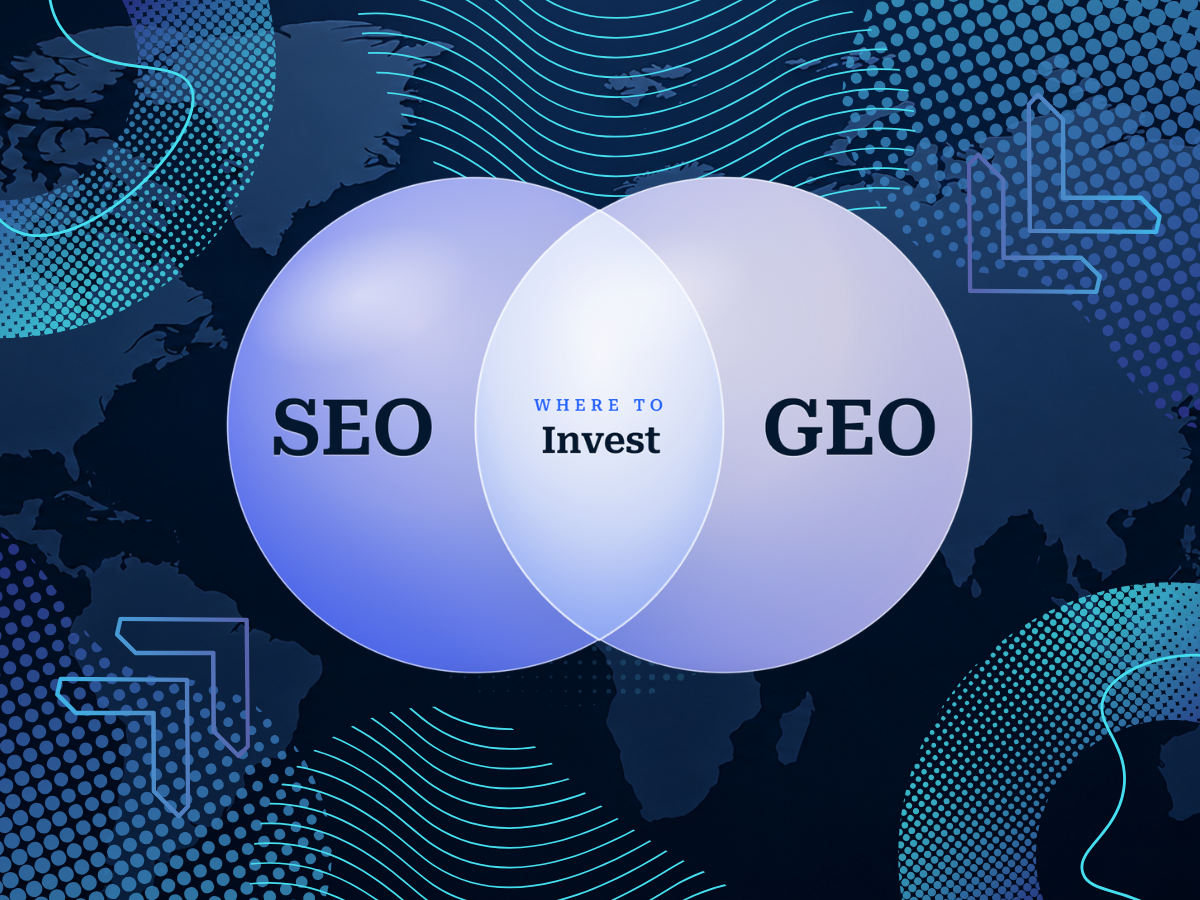
Is SEO dead now that GEO is here?

SEO vs. GEO: SEO is declared dead every couple of years when social media comes into the picture. SEO was pronounced dead when the concept of voice search came along. And now with AI-based search and something known as “GEO,” it appears the death certificate has been issued yet again.

The problem is that SEO always manages to turn up at its own funeral looking completely alive and healthy and demanding some cake.

So, how about a more realistic discussion of what’s really going on, what SEO vs. GEO is, why everyone is excited about it, and what it truly means for your business?

First—what even is GEO?

The GEO acronym stands for Generative Engine Optimization. It is relatively a new term that refers to the optimization process of your content that ensures AI-enabled platforms such as ChatGPT, AI Overviews by Google, Perplexity, among others, will cite, reference, or summarize your brand if someone poses a related question.

For instance, when you type something into ChatGPT and receive a concrete answer from it, there is always some data behind it. In GEO, it entails making sure the source of such information is you.

This innovation is highly exciting since it brings about a revolution in terms of how people can search for online information. Rather than using search engines to search for ten blue links, one only needs to pose a question to an AI and accept its answers.

“The search bar isn’t going away—it’s just growing up. And smart marketers are learning to speak both languages.”

So where does that leave SEO?

First, it should be noted that GEO will never kill SEO. On the contrary, it provides additional options for SEO efforts.

In case you want to ensure good ranking positions in AI-driven search results, then your website content should remain reliable, informative, understandable, and structurally organized. All that has proven to work well with SEO before and continues working now. The foundation hasn’t changed but has been strengthened.

Let me give an example: Google processes over billions of searches on a daily basis, and traditional search results provide huge amounts of traffic to web resources. And people tend to use search engines to find the needed information and make subsequent purchases. That’s how it works now, and that’s how it will work in the future.

What will change is the initial point of that process. And here comes GEO into the picture.

Search Engine Rankings

  • Keywords and Search Intent
  • Backlinks and Domain Authority
  • Site Technical Health
  • Page Structure Optimization
  • Click-Through Rate from SERPs

GEO Ranking factors

  • Good Writing Style
  • In-depth and Authoritative Topics
  • Schema Implementation
  • Brand Mentions Online
  • Be the Reliable AI Source

SEO vs. GEO—a rivalry or a relationship?

SEO vs. GEO: The debate is framed around an unnecessary battle, as if there were some sort of conflict between the two, which would mean one should prevail over the other. It’s all wrong.

To put it simply, SEO is the road you’ve built so far, while GEO involves learning how to navigate through the newly opened roads, which still requires the initial one to be in place and your ability to drive.

As our observations have shown, those companies that had laid solid foundations for their online presence via SEO, including creating valuable and engaging content, maintaining proper structure of the website, and establishing an effective backlink profile, proved to be much more likely to successfully implement GEO in its early stages since AI tools had something useful to refer to.

On the contrary, those that had been playing with low-quality content filled with keywords in order to boost their rankings had no chance to impress any AI-based algorithms with anything but lack of content quality.

Bottom line: if your SEO strategy has involved creating valuable content and providing visitors with useful information so far, then you’re half-way through having an effective GEO strategy.

What does this mean practically for your business?

To all you entrepreneurs and marketers out there: Keep at it. Don’t let up on your SEO efforts. There’s still value to be mined here.

SEO as we knew it before still works. Organic search continues to be one of the most effective ways for a company to acquire traffic. If you have been working with this channel, continue doing so. At the same time, consider how well your content will translate for the sake of an artificial intelligence. Is it easily understood? Is it precise in its answers? Can an AI cite that particular piece of writing in response to a query? These are the important questions that should be considered.

More than ever, structure plays an important role. Getting cited on other reputable sites is increasingly important. Branding and consistency become crucial. While all of these things were always important to digital strategy, they are now more relevant than ever before.

The honest truth about “dead” channels

Marketing channels rarely die—they evolve. Email was declared dead when social media arrived. Social media was declared dead when algorithms got harder to work with. Organic search was declared dead when paid ads took over the top of the results page. Yet here we are, and all of them still work.

SEO vs. GEO isn’t really a battle. It’s a natural progression. The businesses and agencies that will win in the next few years are the ones that understand both that take the strong SEO foundations they’ve already built and learn how to extend them into this new era of AI-powered search.

At DevDigitalSEO, our view is simple: the goal hasn’t changed. Get your business in front of the right people at the right moment. The tools and platforms evolve constantly. The goal stays the same.

So no, SEO isn’t dead. It just has a very interesting new neighbor. And the smart move is to get to know both of them.

Ready to future-proof your search strategy?

DevDigitalSEO helps businesses navigate both SEO vs GEO building strategies that work today and stay relevant tomorrow. Whether you’re starting from scratch or looking to evolve what you’ve already built, we’re here to help.

CategoriesCyber Data Security SEO

What is the purpose of GEO, and why is it becoming essential for SEO strategies?

Let’s be honest — the world of digital marketing never stands still for long. Just when you feel like you’ve got SEO figured out, something new comes along and shifts the ground beneath your feet. That’s not a complaint, by the way. It’s just the nature of a field that’s tied so closely to how technology evolves.

Right now, one of the most talked-about shifts in our industry is something called GEO—Generative Engine Optimization. If you’ve heard the term and wondered what it actually means or why so many marketers are suddenly paying attention to it, you’re in the right place. This article will break it down clearly, without the jargon overload.

So, what exactly is GEO?

GEO stands for Generative Engine Optimization. In simple terms, it’s the practice of optimizing your content so that it gets picked up, referenced, and cited by AI-powered search tools—think Google’s AI Overviews, ChatGPT, Perplexity, Microsoft Copilot, and similar platforms.

Traditional SEO is about getting your website to rank on a search engine results page (SERP). GEO is about getting your content to be used as a source when an AI engine generates a direct answer to someone’s question.

This is a meaningful distinction. With traditional search, a user still has to click through to your website. With AI-generated answers, the AI often delivers the full response right there on the screen. So if your content isn’t being referenced by these tools, you’re essentially invisible to a growing chunk of your potential audience.

Why is GEO becoming so important right now?

The figures make it clear. The results that have been generated by AI are not a rarity anymore but have become the norm for millions of users every single day. The AI overviews from Google have started showing up for a good number of searches. The site called Perplexity is booming. And more individuals have started using ChatGPT first when conducting their research.

At DevDigitalSEO, we’ve been watching this shift closely, and what we’re seeing is that businesses who only focus on traditional SEO are starting to lose visibility — not because their SEO is bad, but because the search landscape itself has expanded. You can rank number one on Google and still miss out on the traffic that flows through AI-generated answers.

Why GEO matters — the key shifts
  • AI search tools like Google’s AI Overview, Perplexity, and ChatGPT are handling hundreds of millions of queries every month.
  • Many AI answers don’t require users to click through to a website — meaning unoptimised brands become invisible in this layer of search.
  • Brands that invest in GEO now are building authority in AI systems early, before competition intensifies.
  • Being cited as a source by AI tools builds credibility and brand awareness even without a direct click.

GEO vs. traditional SEO — what’s the difference?

It’s worth being clear about something: GEO doesn’t replace SEO. Think of them as two parts of the same overall strategy. Traditional SEO is still essential — it helps you rank on search pages, drives organic traffic, and builds domain authority. GEO is the layer you add on top to ensure you’re also showing up in AI-generated responses.

The overlap between the two is significant—good SEO content is often good GEO content too. But there are specific things GEO requires that traditional SEO doesn’t always prioritise, which we’ll get to shortly.

What does GEO actually involve in practice?

Here’s where things get practical. GEO isn’t a single tactic — it’s a collection of content and technical practices aimed at making your content the kind of resource that AI tools trust and reference. Based on what we’ve seen at DevDigitalSEO, here are the core pillars:

1 Answer questions directly and clearly

AI engines like  the content that clarify the topic. In case you get asked “What is GEO?”, you must give an answer straight forward on the page rather than after several scrolls below.

2 Use authoritative, well-structured writing

AI tools tend to pull from content that reads like a trusted source. This means proper use of headings, logical flow, cited facts where relevant, and content written by people who clearly know their subject.

3 Build topical depth, not just keyword density

Rather than targeting single keywords, GEO favors content that covers a topic comprehensively—exploring related questions, nuances, and sub-topics that users actually care about.

4 Keep content fresh and factually accurate

AI systems are trained on current, accurate information. Outdated or factually dubious content is less likely to be cited. Regular content reviews and updates matter more than ever.

5 Strengthen your E-E-A-T signals

Experience, Expertise, Authoritativeness, and Trustworthiness (E-E-A-T) — Google’s quality signals — align closely with what AI tools look for in a credible source. Author bios, citations, and consistent publishing help.

“A useful way to think about it: if a knowledgeable friend were writing a thorough, honest answer to a question for you, what would that look like? That’s the standard GEO content should aim for.”

Is GEO only for big brands?

Not at all — and this is one of the most encouraging things about this shift. AI tools don’t exclusively favour big-name websites. They favour well-structured, authoritative, genuinely useful content. That means a well-run small business blog or a focused niche site can absolutely be cited by AI systems if the content is strong enough.

In fact, smaller, more specialised sources often have an edge here. If your content covers a specific topic with real depth and clarity, an AI engine looking to answer a niche question is likely to find and use it. This is a real opportunity for businesses that are willing to invest in quality content.

Why you shouldn’t wait to start thinking about GEO

One thing the history of SEO teaches us is that early movers have a significant advantage. The businesses that invested in SEO back in the early 2000s built authority that still benefits them today. The ones who waited until SEO was “mainstream” spent years playing catch-up.

GEO is at a similar inflection point right now. AI-powered search is not going away — it’s going to become more prevalent, more sophisticated, and more central to how people find information online. The brands that start aligning their content strategy with GEO principles today are the ones who will have a natural advantage as this space matures.

At DevDigitalSEO, our view is simple: GEO isn’t something you can afford to put off until it feels urgent. By the time it feels urgent, the window for building early authority will have closed.

The bottom line

GEO—Generative Engine Optimization—is the practice of making your content visible and credible to AI-powered search tools. It matters because AI search is no longer a future trend; it’s a present reality that’s reshaping how millions of people find answers every single day.

It works best alongside traditional SEO, not instead of it. The fundamentals — clear writing, real expertise, genuine usefulness — haven’t changed. What’s changed is where that content needs to show up and how it needs to be structured to get there.

CategoriesLocal SEO SEO Web Development

What are local citations in SEO, and why are they important?

Picture yourself opening a very successful small bakery in town. You have the best sourdough in the entire town, an inviting bakery, and happy customers. However, when one of your neighbors types “nearest bakery” into Google Search, they don’t see your website listed. Not even once.

It’s not because you did anything wrong. Your bread is fantastic. The issue is far from complicated; the problem is that Google has yet to confirm that you really exist.

That’s the exact dilemma that citations management services address. At DevDigitalSEO, this is the first thing we do for a local business that doesn’t know how it became invisible on Google.

So, what exactly is a local citation?

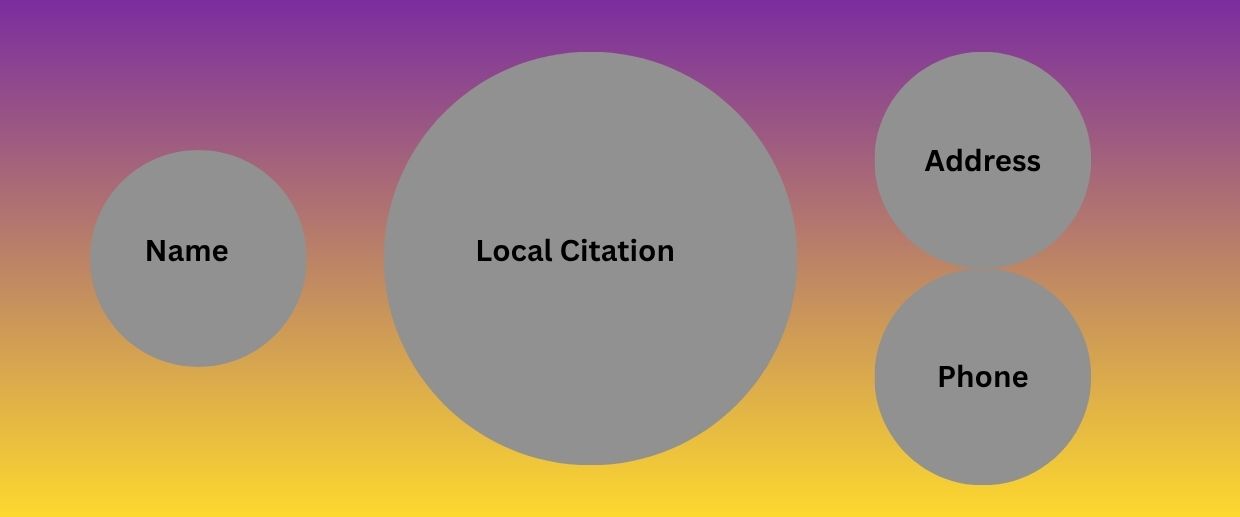
A local citation refers to any reference on the internet that mentions the essential information associated with your business, such as your name, address, and phone number. Together, the three make up an acronym known as NAP in the world of search engine optimization. Local citations can be found everywhere from business directories to industry-specific websites.

  • Name: The exact, consistent business name
  • Address: Full address—formatted identically, every time
  • Phone: The same local number across all listings

Think of citations as digital references. When multiple credible sources across the web all say the same thing about your business—same name, same address, same phone number—Google reads that as a strong signal of legitimacy. The more consistent and widespread those references are, the more confident Google becomes that your business is real, established, and worth showing to searchers nearby.

“Citations are to local SEO what backlinks are to general SEO — they’re votes of existence, and they carry real weight in how Google ranks local businesses.”

Structured vs. unstructured citations

Not all citations look the same. They come in two main forms, and both matter.

Structured

Your business details appear in a formal, dedicated listing. Think Google Business Profile, Yelp, Bing Places, Yell.com, or TripAdvisor. These are intentional, directory-style entries with defined fields for your NAP data.

Unstructured

Your business name and details are mentioned naturally within content—a blog post, a local news article, a community forum, or a journalist’s roundup. Less formal, but still valuable signals to search engines.

Both types send trust signals to Google. A healthy citations strategy, as the team at DevDigitalSEO would tell you, builds both, starting with the high-authority structured directories and then expanding to niche and local sources that are relevant to your specific industry and geography.

Why do citations matter for local SEO rankings?

The search ranking algorithm employed by Google takes into consideration three main components, which include relevance, distance, and prominence. Prominence is directly affected by citations, where it represents the reputation of a business.

With good quality and trustworthy citations all through credible directories, the Google search engine would have an easier time placing your business in “the local pack” – the three most valuable search engine listing positions that every company desires. Your business could actually experience a radical change just by being in the local pack position.

In addition to improving the ranking of your website, citations improve visibility as well, as the optimization of your citation will be visible in any searches made through directories like Yelp and Apple Maps.

The consistency problem—and why it quietly kills rankings

This is usually where many companies fail without even realizing what they have done wrong. Citations require consistency in the company information provided. If your company shows up as “Smith & Sons Plumbing” in Google, “Smith and Sons Plumbing Ltd.” in Yell, and “Smiths Plumbing” in Yelp—these will make them appear as three separate companies to a search engine algorithm.

Incorrect NAP data in the listings is one of the most frequent local SEO mistakes that we see at DevDigitalSEO. These issues tend to be very subtle yet quite destructive to your local presence. A citation audit can easily reveal over 50 conflicts in a business’s citation profile, which have quietly suppressed their performance.

These problems accumulate over time. An old address from an old location, an old phone number or contact info, and an old business name—that is what you get if no one has tried fixing the mistakes. The problem here is that even if a company spends hours building fresh citations, Google won’t reward them if old citations still exist.

How to build citations the right way

Creating a powerful citations list is not hard; it simply takes some time and effort. Here is how it can be done successfully:

First, you need to start with creating entries on the larger business directories such as Google Business Profile, Bing Places, Apple Maps, Facebook, Yelp, and national directories for your country.

Then move on to create entries on the industry-specific directories such as TripAdvisor and OpenTable for the restaurants, legal directories for solicitors, and rated people for the tradespeople.

You also need to add regional and local directories such as local Chambers of Commerce and local councils’ business directories.

Lastly, you have to perform periodic audits of the existing citations and remove any duplicates or incorrect listings.

Create a master NAP file for your company so that each entry will be created identically.

Citations and the bigger local SEO picture

To claim that citations alone will take you to the top in local search is to overlook several important components of local SEO. Citations are indeed an integral part of local SEO, but it is a complex process with many components. These components include optimization of your Google My Business profile, your review scores, your local content, and even your backlink profile.

However, citations are usually low-hanging fruit in terms of achieving a higher ranking in the SERP. Newer companies and even those with no previous experience with local SEO should focus on citations first since these activities can yield visible results within weeks after implementation.

As experts in SEO, DevDigitalSEO believes in laying down solid foundations before going further. If our team agrees to undertake your company’s SEO project, then you better believe that we’ll talk all about content or backlinks only when citations are in place.

CategoriesLocal SEO Marketing SEO

Top Local Citation Strategies to Improve Google Rankings

Suppose you’re a bakery owner making top-quality sourdough—yet your competitor always outranks you on “best bakery near me” searches. Frustrating, right? The difference often isn’t the quality of your bread. It’s the strength of your local citation strategy.

If you’re a local business owner, a marketer, or an entrepreneur trying to crack Google’s local search algorithm, this guide is for you. Let’s break down exactly what local citations are, why they matter more than ever, and the top strategies you can use today to climb the rankings.

Why do we need Local SEO?

What Is a Local Citation?

Local citation is the mentioning of basic information regarding your business in the online space, which includes NAP – Name, Address and Phone number. Local citations can be found across the web in directories, social sites, reviews, maps, apps, and websites.

Citations are just like digital footprints left by you. The more reliable sources there are that provide your business details accurately and consistently, the more likely Google is to consider you a legitimate and relevant company. The more reliable the signals are, the higher up the rankings you’ll go.

Interesting Fact: Based on local SEO studies, citation signals are one of the most influential ranking factors for map packs in Google’s local search engine results pages.

Why Local Citations Matter for Google Rankings

The local Google algorithm is made up of three key components: Relevance, Proximity, and Prominence. The prominence component is powered by local citations. More citations that point towards your company mean higher prominence according to Google.

However, inconsistency can work against you, especially when it comes to contact information such as your phone number. Different numbers on Yelp, Google Business Profile, and Facebook will signal conflicting information to Google, making you less trustworthy in their eyes.

Top Local Citation Strategies to Dominate Google Rankings

Strategy 01

Claim & Optimize Google Business Profile

Your GBP is the single most powerful local citation you can have. Claim it, verify it, and fill every field with accurate, keyword-rich information.

Strategy 02

Build Core Directory Citations

List your business on Yelp, Apple Maps, Bing Places, Facebook, and TripAdvisor. These “tier-1” directories carry the highest authority signals.

Strategy 03

Target Niche-Specific Directories

A dental clinic should be on Healthgrades and a restaurant on Zomato. Niche citations send hyper-relevant local signals to Google.

Strategy 04

Audit & Fix NAP Inconsistencies

Use tools like BrightLocal or Moz Local to find and correct conflicting business information across the web. Consistency is king.

Strategy 05

Earn Local Press Mentions

Getting featured in local news sites, community blogs, or local event pages creates unstructured citations that Google trusts deeply.

Strategy 06

Use Schema Markup on Your Website

Add local business structured data to your site. This acts as a direct citation signal to Google’s crawlers—straight from the source.

Delving Deeper into Advanced Citation Techniques

After setting up your basic citations, scaling your game requires precision. Here’s how to play the game as an expert:

Competitor Citation Analysis: Using tools such as Whitespark, you can research your competitor’s citations and find gaps in your citation portfolio. You can quickly tell which direction you should go if your competitor appears on 40 different directories while you appear on 15.

Geo-Targeted Local Citations: Do not just think at a national level; think hyper-local! Make sure you list your business on directories specific to each city, local chambers of commerce, neighborhood associations, and even city councils’ websites. Google gives extra importance to geo-relevant citations.

Stay Active in Your Profiles: Citation does not equal passive link building. Make sure you update your working hours, especially for holidays, add new images, and respond to all reviews. Active profiles outrank inactive ones.

Bonus Tip: Whenever you relocate your office, change your phone number, or rebrand yourself, update your citation data right away—preferably in the same week. Old NAP data will bring down your local search ranking faster than anything else!

Common Local Citation Mistakes to Avoid

Even well-intentioned businesses make mistakes that silently sabotage their rankings. Watch out for these:

Using different business name formats (e.g., “Dev Digital SEO” vs. “DevDigitalSEO” vs. “Dev Digital S.E.O.”)—pick one and stick to it everywhere. Ignoring duplicate listings on the same platform is another common pitfall — they confuse Google and dilute your authority. Finally, skipping your local citations in favor of just backlinks is a strategy that often backfires. Both work together, not in isolation.

The Long-Term Payoff

Local citation building isn’t glamorous work — but it’s the kind of foundational effort that compounds over time. Businesses that invest in a clean, consistent, and expansive citation profile consistently outperform competitors in local search. They show up in the Google Maps pack. They earn trust from potential customers before a single word is spoken.

When done right, your local citations network becomes a 24/7 referral machine—sending qualified local traffic directly to your door, your phone, and your website.

CategoriesLocal SEO SEO

Mastering Local Citations(NAP Citation): 5 Steps to Improve Your Local Ranking

Most of time you noticed that a competitor close to you ranks higher on Google Maps despite offering poor quality services? The secret usually lies in Local Citations (NAP Citations). Properly understanding and implementing them can completely transform your local SEO performance. Let’s break it down into easy and useful steps.

What Are NAP Citations and Why Do They Matter?

What does NAP stand for? It stands for Name, Address, and Phone number. What is an NAP Citation(Local Citations) then? An NAP citation refers to the instances when your business information gets referenced somewhere online, such as from the directories and review sites, and social media platforms. With each instance that appears, it means Google finds a reliable source about you.

Imagine NAP Citations as a form of trust vote. The better your NAP Citations match throughout the Internet, the more trust Google places on your company being real and the higher rank it will give to your website in local searches.

Here is the most important thing that local business to remember: Inconsistent NAP Citations can impact your rankings. It could be something as simple as leaving out the suite number on one citation and misspelling the street name somewhere else.

Step 1: Analyze Your Current NAP Citations (Local Citations)

Always analyze your existing NAP citations before starting new ones. There are different sites like BrightLocal, Moz Local, and Whitespark that you can use to perform an audit on your citations.

When performing the audit, check for the following:

  • Duplicate NAP Citations
  • Wrong telephone number or wrong address in previous NAP Citations
  • Mismatch in the business name in NAP Citations

Fix things first. You will usually get better results if you correct your existing NAP Citations (Local Citations) rather than creating new ones.

Step 2: Claim and Enhance Your Core Business Listings

The basis of your NAP Citations should begin with the major platforms. Ensure that your NAP Citations are active and correct on the following:

Google My Business – the highest authority when it comes to NAP Citations

  • Bing Places
  • Apple Maps
  • Yelp
  • Facebook

This is where the high authority for NAP Citations lies. Complete all fields on these platforms. An optimized Google My Business profile along with proper NAP Citations can do wonders for your online presence in the map pack.

Step 3: Build NAP Citations on Niche and Local Directories

Once you have your basic NAP Citations sorted out, it’s time to take things further. Submit your NAP Citations to niche directories that correspond to your industry. For instance, if you run a restaurant, your business needs to be listed on Zomato and TripAdvisor. Similarly, if you have a law firm, then you need NAP Citations on Avvo and FindLaw. If you run a plumbing service, then HomeAdvisor and Angi are good choices.

Finally, you shouldn’t neglect local directories. Websites like those of the chamber of commerce and business organizations in the locality can prove to be great sources for geo-specific NAP Citations.

Step 4: Maintain Perfect Consistency in All NAP Citations

This is the core principle of NAP Citations — consistency is crucial. Always maintain the exact same format for your business details across all listings. If your business name is “The Coffee House LLC,” don’t shorten it to “Coffee House” in some places while using the full name elsewhere. Similarly, if your address includes “Street,” avoid changing it to “St.” in different citations.

Create a master document with your official NAP information and refer to it every time you’re submitting new NAP Citations. This simple habit protects the integrity of your NAP Citations (Local Citations) and ensures Google reads only clean & trustworthy signals.

Step 5: Monitor and Update NAP Citations Regularly

NAP Citations are not a one-time task. If your business relocate or somehow you changes its phone number, or rebrands, you must update your NAP Citations everywhere — instantly. Stale NAP Citations with old information will confuse potential customers and send mixed signals to search engines.

Make sure that you set an automatic reminder to check your NAP Citations once every quarter. There are numerous tools that can help you keep track of your NAP Citations including Moz Local and BrightLocal. Managing your NAP citations should always be a continuous process.

Start Building Better NAP Citations Today

Mastering NAP Citations not seem like exciting stuff but it is very important. From auditing your existing NAP Citations to building new ones on niche directories, each action you take builds the credibility your local business deserves online.

In case this seems overwhelming for you, do not worry as you need not be stressed out anymore. DevDigitalSEO is a reliable SEO company in India located in Noida, UP, offering a range of services including Local SEO, on-page SEO, off-page SEO, technical SEO, web design, and web development. Being a team of experts with more than 15 years of collective experience, DevDigitalSEO can assist you in building effective NAP Citations for your business, improving your online presence, and ranking you at the places that matter the most.

📞 +91 81084 82047 | 🌐 devdigitalseo.com

CategoriesMarketing SEO

Why Local Citation Matters in Local SEO

Today’s digital competition makes it important for businesses to rank well in local searches. Whether you run a local store, provide services, or are starting a new venture, visibility in your area is crucial. One simple but powerful strategy that many businesses miss is Local Citation. Understanding its value in Local SEO can give your business a strong advantage.

What is Local Citation?

Local Citation refers to the presence of your business information on various online platforms, directories, and websites across the internet. This typically includes essential details such as your business name, address, and phone number, which help create a consistent identity for your brand online. When your business information appears on multiple trusted platforms, it becomes easier for search engines to recognize and validate your business as genuine and reliable.

Even if these listings do not include a direct link to your website, they still play a crucial role in improving your credibility and visibility in local search results. For example, when your business is listed on popular directories like Justdial or Sulekha, it strengthens your online presence and helps potential customers find your services more easily. This overall process is known as a Local Citation, and it is an important part of building trust and improving your local SEO performance.

Why is Local Citation Important in Local SEO?

1. Builds Trust and Credibility

Search engines like Google use data to show relevant search results to users. If your business’s data is consistent on various platforms, it builds trust. A strong Local Citation profile establishes that your business is legitimate.

2. Improves Local Search Rankings

One of the biggest advantages of Local Citation is the direct impact it has on improving your ranking. When you have a presence in various directories, you are perceived as being authoritative. This improves your chances of being included in the “Local Pack” (top 3 results on the Map).

3. Increases Online Visibility

The more directories you have a presence in, the higher the probability of being discovered by potential customers. Your Local Citation is essentially an opportunity for potential customers to discover your business. Even if they are not searching online via the three main search engines, they may be searching via the various directory platforms.

4. Drives Targeted Traffic

Your Local Citation has the power to drive highly targeted traffic to your website/business. When you have a presence in local directories, you are essentially targeting potential customers who are ready to take action. They may be calling you, visiting your store, etc.

5. Supports Google Business Profile Optimization

Your Local Listing is directly Appearance to your Google Business Profile. When you have consistent citations, you are essentially verifying your business. This improves your ranking.

Types of Local Citation

1. Structured Citations

These are present when your business details are listed on business listing sites with a structured format. An example would be IndiaMART.

2. Unstructured Citations

These occur when you are mentioned as a business entity on blogs, news sites, etc. This too qualifies as a Local Citation.

Best Practices for Local Citation

If you want to get the best out of your Local Listing strategy, you should follow these best practices:

  • Consistent NAP – Your business name, location, and phone number should all match.
  • Choose Relevant Directories – Choose directories that are relevant for your business.
  • Update Your Details – Keep updating your details regularly.
  • Avoid Duplicate Listings – Duplicate citations can confuse the search engine and may affect rankings.
  • Add Your Business Details – Add website details, business timings, etc.

Common Mistakes to Avoid

There are many common mistakes that many businesses make while creating their Local Citation strategy:

  • Having different business names for different directories.
  • Entering incorrect business details.
  • Including low-quality directories.
  • Not updating old directories with new business details.

These are the common mistakes you should avoid for better Local SEO results.

Conclusion

Local Citation plays a key role in Local SEO and should never be overlooked. It helps search engines recognize, confirm, and rank your business more accurately. A well-planned Local Listing strategy not only boosts your rankings but also builds trust and improves your visibility among local customers. If you want to grow your business locally, start working on your Local Citation today. With consistent efforts, you’ll see clear improvements in your rankings and business growth.


CategoriesSEO UI/UX Design Web Development

Top E-commerce SEO Mistakes Beginners Can’t Ignore

Starting an online store is one thing, but making it visible on Google is another level altogether. New store owners often get busy uploading products and creating ads while overlooking basic SEO fundamentals. Ignoring these can lead to serious E-commerce SEO mistakes that harm your growth. Even minor errors can impact your rankings. Here, we will discuss key E-commerce SEO mistakes that beginners must avoid.

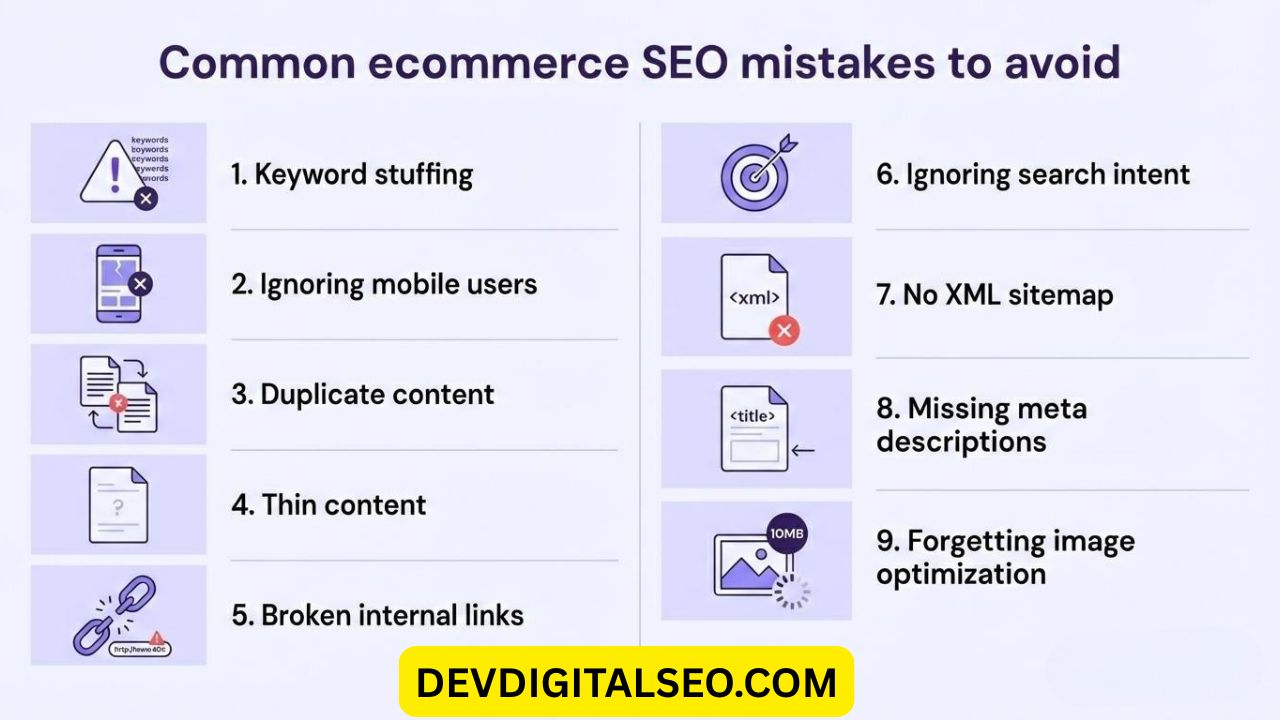
1. Ignoring Keyword Research

One of the major Online store SEO mistakes is not conducting proper keyword research. Most online store owners simply do not bother to research what their customers might be looking for, while others do not bother to use tools to do so. If you do not use proper keywords, your products may not even show up in search results.

2. Poor Product Page Optimization

Another major E-commerce SEO Mistakes is not optimizing your product pages. Just adding your product name and price is not enough. There is much more to do.

  • Your product pages should have:
  • Optimized title tags
  • Product descriptions
  • Meta descriptions
  • Alt attributes
  • Proper internal links

3. Utilizing Duplicate Content

A common online store SEO mistake is relying on duplicate content. Many new retailers copy product information instead of creating their own.

This strategy fails to deliver results and can hurt your website’s performance.

By writing unique and valuable product descriptions, you can strengthen your SEO and increase conversion rates.

4. Lack of Technical SEO

Technical SEO is often overlooked by novice online retailers and is therefore included in this list of E-commerce SEO Mistakes.

Some of the most common technical issues faced by online retailers include:

  • Slow speed of your online business
  • Presence of broken links
  • No XML sitemap
  • Poor URL structure
  • No mobile-friendliness

Search engines favor online retailers with high speeds and user-friendliness.

5. Weak Site Structure

Improper website structure is another frequent online store SEO mistake made by beginners.

For better usability and improved search rankings, your site should have a clean and logical setup.

This includes a well-planned category hierarchy and a solid internal linking system.

6. Ignoring Mobile Optimization

Today’s online shopper uses a mobile device most often to browse and search online. Therefore, this is one of the most important Online store SEO mistakes that need correction.

Your website must be optimized for mobile devices by ensuring that it:

  • Is loaded quickly
  • Has a responsive design
  • Uses clear font and font sizes
  • Has a simple navigation system

7. Not Optimizing Category Pages

Beginners in online marketing often optimize product pages and forget about category pages. This is one of the most important yet hidden E-commerce SEO Mistakes.

Category pages must be optimized by including:

  • Keyword-rich headings
  • Some content
  • Internal links to product pages
  • Meta tags

These types of pages have a high probability of ranking for more general business-related keywords.

8. Ignoring Image Optimization

Large images that have not been compressed slow down your online business’s loading speed. This is one of the most important yet avoidable E-commerce SEO Mistakes.

Image optimization must be done by compressing images and using:

  • Keyword-rich alt text
  • Descriptive file names

9. Lack of Customer Reviews

User-generated content increases trust and boosts SEO ranking. Lack of attention to customer reviews is one of the strategic E-commerce SEO Mistakes that beginners often make.

Customer reviews provide content variety to product content and increase click-through rates in search engine results.

10. No Content Marketing Strategy

E-commerce sites that rely only on product content are making one of the biggest E-commerce SEO Mistakes.

Well-written content increases backlinks and authority in due course.


11. Poor Internal Linking

Poor internal linking is one of the most overlooked Online store SEO mistakes.

Internal linking increases crawl efficiency by linking related content within your site.

12. Not Tracking Performance

One of the most dangerous Online store SEO mistakes is not monitoring analytics. Without this, it’s impossible to get better.

Use tools such as:

  • Google Analytics
  • Google Search Console

These tools will be helpful in monitoring traffic and indexing issues.

Final Thoughts

By avoiding these E-commerce SEO Mistakes, your online business will be able to rank better in search engines. Many people starting out in online business may not take SEO as a serious aspect of online business. However, by constantly working on your online business’s optimization, you will be able to achieve long-term success.

By avoiding these Online store SEO mistakes, your online business will be able to compete well in the online marketplace.

If you need, I will be able to create a meta description and SEO title variations for this article.

CategoriesMarketing SEO UI/UX Design

Local SEO: The Hidden Reasons Why You’re Not Ranking in Local Search

If your business isn’t coming up in local searches, know that this is a problem that many small and medium businesses have. There are even businesses that have created a website, social media accounts, and maybe even have some reviews, that still do not get ranked. This is usually due to a poorly constructed Local SEO, or Local Search Engine Optimization.

Let’s take a deep dive and figure out what Local SEO is, and how to improve it.

1. Your Google Business Profile Is Not Fully Optimized

Missing Google Business Profile optimization is a huge reason why businesses nationwide fail in Local SEO Google Business Profile. Owners create listings and just forget to do the following:

  • Use relevant categories
  • Optimize category selection
  • Upload high-quality photos
  • Optimize business hours information
  • Add proper services and products 

Google rewards businesses that have and offer the most complete and updated prof

You will gain higher trust/ranking and visibility that results in more calls.

2.  Inconsistent NAP Information

NAP stands for Name, Address, and Phone Number. This is the most overlooked yet the most important thing to consider when doing your Local SEO. If your business information is different on social platforms, business directories, or your website, Google is going to get confused and not offer your business as a suggestion.

Here are some issues related to consistency and NAP that can hurt rankings:

  • Your website shows one phone number
  • Your Facebook page shows another
  • A local directory lists an old address

These inconsistencies hurt ranking. Be consistent with NAP across the web.

3. You’re Targeting the Wrong Keywords

Local businesses are trying to position themselves for keywords like to digital marketing or to digital marketing instead of to digital marketing agency in Southampton.

In local SEO, you have to think about the geography. If your keywords are without the name of your city, you are attempting to compete on a federal level rather than a local one. You can identify search phrases that include your service + location.

4. Weak On-Page Optimization

A good website will help, and good on-page organization will help support your local SEO.

Ensure that your site has:

  • Location-specific title tags
  • Meta descriptions with city names
  • Proper H1, H2 headings
  • Local schema markup
  • Embedded Google Map

Your service area and service descriptions should be on your homepage and service pages. Google must be clear about your location.

5. No Localized Content Strategy

If your site has been created with only generic service pages, you are missing a big opportunity. Local SEO is very powerful.

Create blog posts about:

  • Local events
  • Industry news in your city
  • Case studies of local clients
  • Area-specific service pages

This helps Google associate your business with your location and increases local authority.

6. Missing Customer Feedback or Poor Online Review Strategy

Local SEO reviews significantly impact search rankings due to Google’s frequency and quality review analysis.

If you have

  • Very few reviews
  • No recent reviews
  • Negative reviews without responses

Your ranking may suffer.

Encourage satisfied customers to leave reviews and always respond professionally. Active review management builds trust and improves visibility.

7. Poor Mobile Experience

Local searches are intended to be user friendly. Low Local SEO standards will occur due to unfriendly user websites. 

Usage problems that are common are as follows:

  • Slow loading speed
  • Hard-to-click buttons
  • Unreadable text
  • Broken layout

Use the Google PageSpeed program to resolve speed problems.

8.Weak Local Off-Page SEO Strategy

Most underlying ranking factors are referring to backlinks in Local SEO. However, Local backlinks are considered to be more valuable than broad range backlinks.

  • Local news websites
  • Business directories
  • Chamber of commerce websites
  • Local bloggers

Your scores will improve if you have higher quality backlinks instead of unfocused or low quality backlinks.

9. Poor Technical SEO Implementation

Local SEO efforts may be hindered by technical faults. Even with solid content, technical matters can obstruct indexing.

Look to see if there are:

  • Broken links
  • Duplicate content
  • Crawl errors
  • Missing SSL certificate
  • Incorrect redirects

Conducting technical audits will keep your site user-friendly.

10. Not Tracking Performance Properly

Because you can’t record failures, there is no way to improve or remedy the problem. A majority of businesses end up failing to succeed in Local SEO is because they do not record data.


Keep track of:

  • Keyword rankings
  • Website traffic
  • Google Business insights
  • Click-through rates
  • Calls and direction requests

Tracking helps to analyze if something is working well or not, so adjustments can be made. 

11. High Competition in Your Area

In some instances, the issue is not mistakes, but rather competitors. If your rival(s) have more reviews, more authority, & superior optimization, your Local SEO ranking will be lower. 

Analyze your competitors:

  • What keywords do they utilize? 
  • How many reviews do they have? 
  • How optimized is their profile? 

Utilize your competitors to gain a better analysis.

12. You’re Not Updating Your Profile Regularly

Google wants to see businesses that are active. If your profile has not been updated frequently, the posts are not updated, or the images are not updated, there will be a serious decline in your Local SEO performance.

You should post on your Google Business Profile:

  • Offers
  • Updates
  • Events
  • Announcements

Active interaction demonstrates reliability.

13. Website Structure

A confusing website structure makes it difficult for potential customers to navigate your website. For better Local SEO, your site structure should contain:

  • Clear navigation
  • Separate service pages
  • Location pages (if serving multiple cities)
  • Fast internal linking

The better your website structure, the better your website’s crawlability and your website’s conversion rate.

14. Ignoring Social Signals

Although social media is not a direct ranking factor, it does indirectly affect Local SEO and social media. Social media increases the visibility, engagement, and recognition of a brand. Social media access drives traffic to the brand recognition.

  • Match your NAP details
  • Include website links
  • Stay active with posts

  Social media presence only along with consistency increases the social media trust.

15. Expectation of Immediate Results

A big misconception is the expectation of immediate results. Local SEO is a long-term strategy. It requires a gradual improvement of rankings because of the increase of authority, trust, and engagement.

The key is Consistency:

  • Keep optimizing
  • Keep collecting reviews
  • Keep building backlinks
  • Keep publishing content

Your efforts will one day pay off.

Final Thoughts

Businesses frequently face budget constraints, making a well-planned strategy crucial. Local SEO requires patience, regular optimization, and consistent quality work. With time and the right approach, your online visibility strengthens. There’s no quick fix—only sustained, strategic action leads to better rankings, more store visits, and increased customer growth.

DevDigital SEO is a results-driven digital marketing agency offering SEO, link building, SMM, SMO, UI/UX design, and web development services. We help businesses grow online with smart strategies, higher rankings, and powerful web solutions tailored for success.

CategoriesMarketing SEO Web Development

Top Google My Business SEO Mistakes & Fixes: Local SEO

To get your business to show up in Google Maps and local search results, you need to optimize your Google Business Profile (previously Google My Business). A lot of businesses spend money on ads and websites, but they don’t fix little faults in their profiles that hurt their exposure without their knowing it. These blunders have a direct impact on your Local SEO, which decides if clients find you or your competition.

We will talk about the most common problems people make with their Google Business Profiles and how to repair them in this article.

1. Incomplete Business Profile Information

Several businesses neglect key information fields including descriptions, service listings, business hours, characteristics, and categories. Google rewards detailed and well-maintained profiles in Local SEO results. An incomplete profile suggests a lack of professionalism and proper setup.

✅ The Fix:

  • Fill in every section available.
  • Write a keyword-rich business description.
  • Add business hours (including holiday hours).
  • Add services and products clearly.
  • Select the most relevant primary and secondary categories.

A well-optimized listing improves discoverability and boosts customer confidence.

2. Wrong Primary Category Selection

Using an inaccurate or overly general primary classification.

Such as selecting “Marketing Agency” rather than “SEO Agency” if SEO is your main expertise.

The Fix: 

  • Choose the most specific primary category.
  • Add relevant secondary categories.
  • Research competitors ranking above you.

Choosing a category is one of the most important ranking factors in Local SEO.


3. Inconsistent NAP Information

Name, Address, and Phone Number are what NAP stands for.

❌ The Mistake: 

The contact information on the website is different from the other places.

  • Directories
  • Profiles on social media
  • Profile for Google Business

Google gets confused by inconsistent data, which makes people less likely to trust it.

The Fix:

Make sure NAP is the same everywhere.

  • Refresh old directories.
  • Always use the same format.

Being consistent makes your Local SEO more powerful.

4. Ignoring Customer Reviews

❌ The Mistake:

Not asking for reviews or not addressing to them.

One of the most important things for Local SEO is reviews.

The Fix:

  • Get reviews from happy consumers.
  • Answer every review,both positive and negative.
  • Use keywords in your answers in a natural way.

For example, “Thank you for choosing our digital marketing services in Delhi.”

Managing reviews actively creates trust and gets people more involved.

5. Using low-quality photos

❌ The Mistake:

Not uploading any photos or using low-quality ones.

Profiles with pictures attract a lot more clicks and requests for directions.

The Fix:

  • Upload professional photos.
  • Add team photos.
  • Add office images.
  • Add before-and-after results (if applicable)..

Regularly updated pictures make people more interested and help Local SEO work better.

6. Keyword Stuffing in Business Name

❌ The Mistake:

Adding more keywords, like: “ABC Digital Marketing | SEO Expert | Best Agency | Google Ads Specialist,”

This goes against Google’s rules and could get you banned.

The Fix: 

Only use your legal business name.

Improve keywords in:

  • Description
  • Services part
  • Posts
  • Website content

Long-term Local SEO stability is better with clean branding.

7. Not Posting Regular Updates

❌ The Mistake:

Missing to Google Posts.

You can share offers on Google Posts.

  • Offers
  • Updates
  • Blogs
  • Events
  • Announcements

Outdated profiles can harm online visibility and engagement.

The Fix:

Post once a week: 

  • Service updates
  • Case studies
  • Promotions
  • Blog highlights

Posting regularly shows that you are active and helps with Local SEO engagement.

8. Ignoring Q&A Section

❌ The Mistake:

Not answering questions in the Q&A portion.

People can ask and answer questions about your business.

The Fix:

  • Add your own FAQs.
  • Answer questions professionally.
  • Monitor regularly.

Optimized Q&A makes keywords more relevant and makes Local SEO more visible.

9. Lack of technical SEO

Your Google Business Profile has a link to your website.

❌ The Error:

Sending traffic to: 

  • Slow websites
  • Non-mobile-friendly pages
  • Pages without clear CTAs

This makes the bounce rate go up and the ranking potential go down.

✅ The Fix:

  • Optimize website speed.
  • Ensure mobile responsiveness.
  • Add clear contact options.
  • Create location-specific landing pages.

Strong website optimization helps Local SEO flourish as a whole.

10. Not Tracking Performance

❌ The Mistake

Not looking at the insights data.

You can keep track of:

  • Profile views
  • Calls
  • Direction requests
  • Website clicks

You can’t improve your plan without tracking.

The Fix

  • Identify which posts drive the most engagement.
  • Track keyword rankings consistently..
  • Regularly monitor keyword ranking fluctuations.

Making decisions based on data always leads to better Local SEO outcomes.

Bonus Mistake: Not Making Local Backlinks

You won’t rank high even if your profile is great if you don’t have authority.

❌ The Mistake

Not creating links in your area.

The Fix

Get your name in local directories.

  • Get links back from local bloggers.
  • Work together with businesses in your area.
  • Help pay for events in your area.

Authority signals make your Local SEO stronger.

Last Thoughts

Your Google Business Profile is more than simply a listing; it’s a great way to get leads. Small mistakes might make you less visible, get fewer calls, and lose business.

In short:

  • Fill out your profile completely.
  • Choose the right categories.
  • Keep NAP consistent.
  • Get reviews and answer them.
  • Post regularly.
  • Avoid keyword stuffing.
  • Optimize your website.
  • Build local authority.

Your Google Business Profile is the most important part of your Local SEO plan. If you do it right, it will help you get to the top of local search results.

If you work on correcting these problems, you’ll not only move up in the rankings, but you’ll also get more calls, leads, and genuine company growth.

CategoriesDesign Marketing SEO Web Development

Common Local SEO Mistakes Small Businesses Make

Local SEO is a powerful tool that helps small businesses get better results from their online marketing. No matter if you own a bakery, dental office, coaching center, or marketing agency, people are constantly searching for nearby services. If your business is missing from local search listings, you are losing customers to competitors.

Unfortunately, many owners make critical Local SEO Mistakes without even realizing it, which affects their Google rankings. In this article, we highlighted the most common Local SEO Mistakes and shared practical ways to fix them to boost your traffic, leads, and online presence.

1. Ignoring Google Business Profile Best Practices

Failing to manage and optimize a Google Business Profile properly is one of the major Local SEO Mistakes small businesses commit. Either the profile remains unclaimed or it is only partially completed, limiting its effectiveness.

  • Exact business name
  • Accurate contact information (address and phone)
  • Updated working hours
  • High-resolution images
  • Proper category selection
  • Well-written service details

One of the worst Local SEO mistakes is having an inadequate or out-of-date profile. This is because Google uses this information a lot to rank your business locally.

2. Incorrect or Inconsistent NAP Information

In local SEO, NAP means Name, Address, and Phone number. One of the serious Local SEO Mistakes businesses make is publishing mismatched NAP details across websites, directories, and social media accounts.

For instance, if your business address is written differently in multiple places, Google may not trust the information fully. This inconsistency weakens your authority and affects rankings.

To fix this Local SEO Mistakes problem, maintain identical business details on every platform.

3. Weak Local Keyword Strategy

Small businesses often target generic keywords while overlooking geo-targeted phrases. This oversight is among the frequent Local SEO Mistakes that prevent them from ranking in local results.

For instance:

  • Instead of “digital marketing services,” say “digital marketing services in Southampton.”
  • Use “SEO agency in Mumbai” instead of “SEO agency.”

One of the most important Local SEO Mistakes that keeps your website from showing up in local searches is not incorporating city, area, or region names in your content.

4. Skipping Local Landing Pages

If you service more than one area, you need separate landing pages for each one. Making only one generic service page is one of the major Local SEO Mistakes that keeps you from growing.

For instance:

  • /seo-services-london
  • /seo-services-manchester
  • /seo-services-birmingham

If you don’t have pages for each city, you’re making local SEO Mistakes that make it less likely that you’ll rank well in other locations.

5. Neglecting Customer Feedback

Reviews on the internet are very important for local rankings. Not asking clients to submit reviews is one of the worst things you can do for Local SEO.

Google thinks about:

Look at the number of reviews:

  • Review quantity
  • Review quality
  • Review frequency
  • Owner responses

One of the worst things you can do for your local SEO is to ignore reviews, especially if your competitors are actively collecting and responding to them.

Always ask pleased customers for evaluations and reply professionally to both good and bad feedback.

6. Ignoring Mobile-Friendly Design

Most searches for things in your area are done on mobile devices. You are making big Local SEO mistakes if your website is slow or not mobile-friendly.

Your website needs to:

  • Load in less than three seconds
  • Be able to respond on all devices
  • Make it easy to get around
  • Add buttons that let people call you

One of the most prevalent Local SEO Mistakes that turns away potential clients is a bad mobile experience.

7. Poor Local Content Strategy

Publishing general blog posts without a local angle is another example of Local SEO Mistakes.

  • Instead of saying “Advantages of Hiring an SEO Agency,”
  • “Why SEO Services Are Important for Small Businesses in Southampton”

Localized content helps you avoid Local SEO Mistakes that come from getting traffic that isn’t appropriate to your area.

8. Weak Local Citation Strategy

Local citations are when your business is listed on directories and listing sites. One of the most common Local SEO mistakes small businesses make is not building citations.

You should put your business on:

Directories in your area

  • Directories for specific industries
  • Websites for Chambers of Commerce
  • Listing sites you can trust

If you don’t use citations, you’re making the same Local SEO Mistakes that hurt your local authority.

9. Weak Local Backlink Profiles

Getting links from local websites makes you look more trustworthy. A lot of firms just pay attention to general backlinks, which is one of the most common Local SEO mistakes.

Get links from:

  • Local blogs
  • Websites for local news
  • Groups in the community
  • Pages for sponsoring events

Not creating links in your area is one of the Local SEO Mistakes that might slow down your development and keep you from growing.

10. Failing to Use Structured Data

Schema markup makes it easier for search engines to grasp information about your business. One of the technical Local SEO Mistakes is not paying attention to structured data.

Adding local business schema can make things better:

  • Search visibility
  • Rich snippets
  • Rates of click-through

This is one of the quiet but important Local SEO Mistakes that many small businesses make.

11. Confusing Site Navigation

You are making structural Local SEO mistakes if your website is hard to use or doesn’t have clear service pages.

Ensure:

  • Clear service groups
  • Simple to use
  • Linking correctly throughout the site
  • Optimized meta descriptions and title tags

A disorganized website structure is one of the Local SEO Mistakes that may be avoided and that hurts both users and rankings.

12. Ignoring Local SEO Analytics

Another big problem with Local SEO is not keeping track of results. You can’t get better if you don’t keep an eye on performance.

Use tools like these:

  • Google Analytics
  • Google Search Console

Tracking helps you find and repair Local SEO mistakes before they do damage that lasts a long time.

Conclusion: Local SEO Mistake

Local SEO has the power to reshape a small business by boosting discoverability, leads, and revenue, yet ignoring even one Local SEO Mistake can limit results, especially when problems such as incomplete Google Business Profile optimization, inconsistent NAP information, weak mobile usability, poor content strategy, or lack of backlinks exist; by identifying and correcting every Local SEO Mistake step by step, you improve rankings, enhance credibility, and create sustainable business growth.

Proudly powered by Themelexus.com