
CategoriesAI Local SEO Marketing SEO

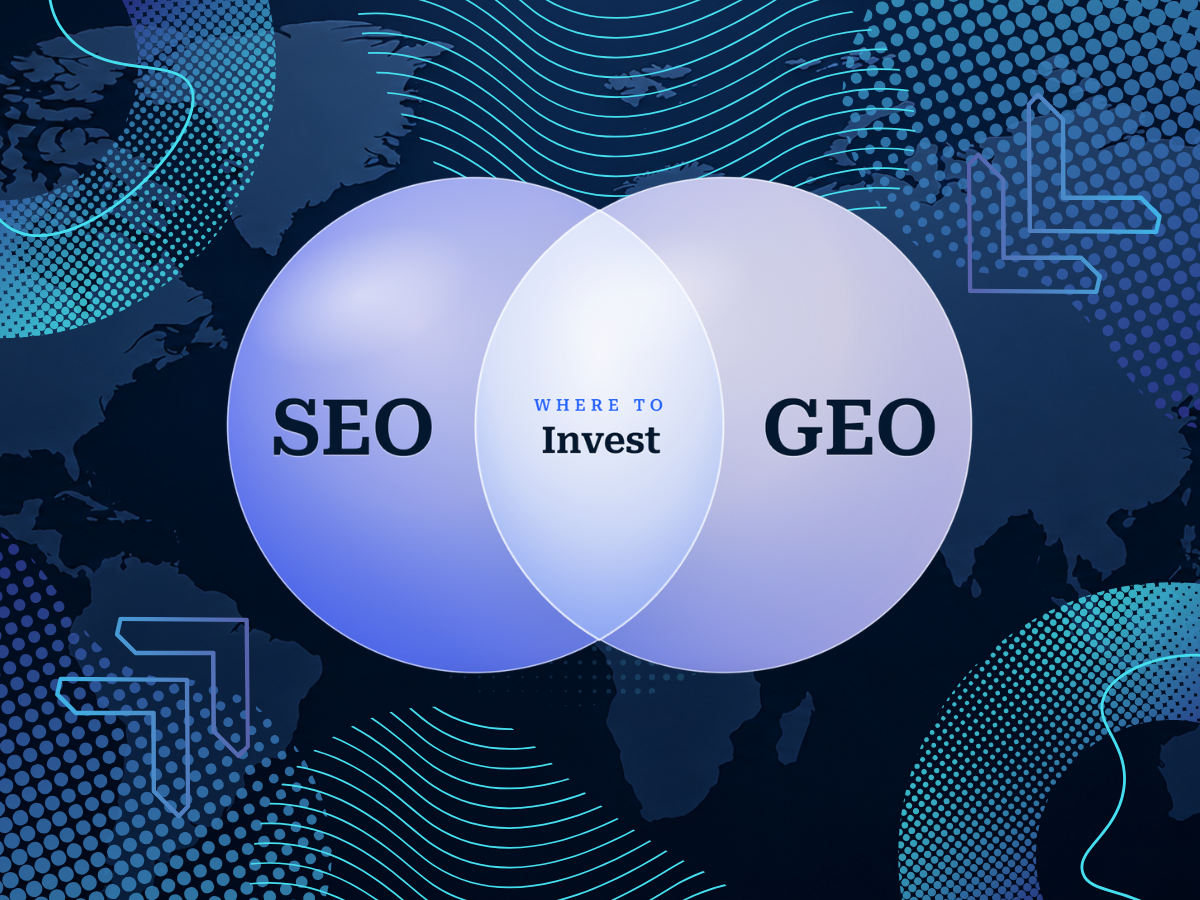
Is SEO dead now that GEO is here?

SEO vs. GEO: SEO is declared dead every couple of years when social media comes into the picture. SEO was pronounced dead when the concept of voice search came along. And now with AI-based search and something known as “GEO,” it appears the death certificate has been issued yet again.

The problem is that SEO always manages to turn up at its own funeral looking completely alive and healthy and demanding some cake.

So, how about a more realistic discussion of what’s really going on, what SEO vs. GEO is, why everyone is excited about it, and what it truly means for your business?

First—what even is GEO?

The GEO acronym stands for Generative Engine Optimization. It is relatively a new term that refers to the optimization process of your content that ensures AI-enabled platforms such as ChatGPT, AI Overviews by Google, Perplexity, among others, will cite, reference, or summarize your brand if someone poses a related question.

For instance, when you type something into ChatGPT and receive a concrete answer from it, there is always some data behind it. In GEO, it entails making sure the source of such information is you.

This innovation is highly exciting since it brings about a revolution in terms of how people can search for online information. Rather than using search engines to search for ten blue links, one only needs to pose a question to an AI and accept its answers.

“The search bar isn’t going away—it’s just growing up. And smart marketers are learning to speak both languages.”

So where does that leave SEO?

First, it should be noted that GEO will never kill SEO. On the contrary, it provides additional options for SEO efforts.

In case you want to ensure good ranking positions in AI-driven search results, then your website content should remain reliable, informative, understandable, and structurally organized. All that has proven to work well with SEO before and continues working now. The foundation hasn’t changed but has been strengthened.

Let me give an example: Google processes over billions of searches on a daily basis, and traditional search results provide huge amounts of traffic to web resources. And people tend to use search engines to find the needed information and make subsequent purchases. That’s how it works now, and that’s how it will work in the future.

What will change is the initial point of that process. And here comes GEO into the picture.

Search Engine Rankings

  • Keywords and Search Intent
  • Backlinks and Domain Authority
  • Site Technical Health
  • Page Structure Optimization
  • Click-Through Rate from SERPs

GEO Ranking factors

  • Good Writing Style
  • In-depth and Authoritative Topics
  • Schema Implementation
  • Brand Mentions Online
  • Be the Reliable AI Source

SEO vs. GEO—a rivalry or a relationship?

SEO vs. GEO: The debate is framed around an unnecessary battle, as if there were some sort of conflict between the two, which would mean one should prevail over the other. It’s all wrong.

To put it simply, SEO is the road you’ve built so far, while GEO involves learning how to navigate through the newly opened roads, which still requires the initial one to be in place and your ability to drive.

As our observations have shown, those companies that had laid solid foundations for their online presence via SEO, including creating valuable and engaging content, maintaining proper structure of the website, and establishing an effective backlink profile, proved to be much more likely to successfully implement GEO in its early stages since AI tools had something useful to refer to.

On the contrary, those that had been playing with low-quality content filled with keywords in order to boost their rankings had no chance to impress any AI-based algorithms with anything but lack of content quality.

Bottom line: if your SEO strategy has involved creating valuable content and providing visitors with useful information so far, then you’re half-way through having an effective GEO strategy.

What does this mean practically for your business?

To all you entrepreneurs and marketers out there: Keep at it. Don’t let up on your SEO efforts. There’s still value to be mined here.

SEO as we knew it before still works. Organic search continues to be one of the most effective ways for a company to acquire traffic. If you have been working with this channel, continue doing so. At the same time, consider how well your content will translate for the sake of an artificial intelligence. Is it easily understood? Is it precise in its answers? Can an AI cite that particular piece of writing in response to a query? These are the important questions that should be considered.

More than ever, structure plays an important role. Getting cited on other reputable sites is increasingly important. Branding and consistency become crucial. While all of these things were always important to digital strategy, they are now more relevant than ever before.

The honest truth about “dead” channels

Marketing channels rarely die—they evolve. Email was declared dead when social media arrived. Social media was declared dead when algorithms got harder to work with. Organic search was declared dead when paid ads took over the top of the results page. Yet here we are, and all of them still work.

SEO vs. GEO isn’t really a battle. It’s a natural progression. The businesses and agencies that will win in the next few years are the ones that understand both that take the strong SEO foundations they’ve already built and learn how to extend them into this new era of AI-powered search.

At DevDigitalSEO, our view is simple: the goal hasn’t changed. Get your business in front of the right people at the right moment. The tools and platforms evolve constantly. The goal stays the same.

So no, SEO isn’t dead. It just has a very interesting new neighbor. And the smart move is to get to know both of them.

Ready to future-proof your search strategy?

DevDigitalSEO helps businesses navigate both SEO vs GEO building strategies that work today and stay relevant tomorrow. Whether you’re starting from scratch or looking to evolve what you’ve already built, we’re here to help.
CategoriesCyber Data Security SEO

What is the purpose of GEO, and why is it becoming essential for SEO strategies?

Let’s be honest — the world of digital marketing never stands still for long. Just when you feel like you’ve got SEO figured out, something new comes along and shifts the ground beneath your feet. That’s not a complaint, by the way. It’s just the nature of a field that’s tied so closely to how technology evolves.

Right now, one of the most talked-about shifts in our industry is something called GEO—Generative Engine Optimization. If you’ve heard the term and wondered what it actually means or why so many marketers are suddenly paying attention to it, you’re in the right place. This article will break it down clearly, without the jargon overload.

So, what exactly is GEO?

GEO stands for Generative Engine Optimization. In simple terms, it’s the practice of optimizing your content so that it gets picked up, referenced, and cited by AI-powered search tools—think Google’s AI Overviews, ChatGPT, Perplexity, Microsoft Copilot, and similar platforms.

Traditional SEO is about getting your website to rank on a search engine results page (SERP). GEO is about getting your content to be used as a source when an AI engine generates a direct answer to someone’s question.

This is a meaningful distinction. With traditional search, a user still has to click through to your website. With AI-generated answers, the AI often delivers the full response right there on the screen. So if your content isn’t being referenced by these tools, you’re essentially invisible to a growing chunk of your potential audience.

Why is GEO becoming so important right now?

The figures make it clear. The results that have been generated by AI are not a rarity anymore but have become the norm for millions of users every single day. The AI overviews from Google have started showing up for a good number of searches. The site called Perplexity is booming. And more individuals have started using ChatGPT first when conducting their research.

At DevDigitalSEO, we’ve been watching this shift closely, and what we’re seeing is that businesses who only focus on traditional SEO are starting to lose visibility — not because their SEO is bad, but because the search landscape itself has expanded. You can rank number one on Google and still miss out on the traffic that flows through AI-generated answers.

Why GEO matters — the key shifts
  • AI search tools like Google’s AI Overview, Perplexity, and ChatGPT are handling hundreds of millions of queries every month.
  • Many AI answers don’t require users to click through to a website — meaning unoptimised brands become invisible in this layer of search.
  • Brands that invest in GEO now are building authority in AI systems early, before competition intensifies.
  • Being cited as a source by AI tools builds credibility and brand awareness even without a direct click.

GEO vs. traditional SEO — what’s the difference?

It’s worth being clear about something: GEO doesn’t replace SEO. Think of them as two parts of the same overall strategy. Traditional SEO is still essential — it helps you rank on search pages, drives organic traffic, and builds domain authority. GEO is the layer you add on top to ensure you’re also showing up in AI-generated responses.

The overlap between the two is significant—good SEO content is often good GEO content too. But there are specific things GEO requires that traditional SEO doesn’t always prioritise, which we’ll get to shortly.

What does GEO actually involve in practice?

Here’s where things get practical. GEO isn’t a single tactic — it’s a collection of content and technical practices aimed at making your content the kind of resource that AI tools trust and reference. Based on what we’ve seen at DevDigitalSEO, here are the core pillars:

1 Answer questions directly and clearly

AI engines like  the content that clarify the topic. In case you get asked “What is GEO?”, you must give an answer straight forward on the page rather than after several scrolls below.

2 Use authoritative, well-structured writing

AI tools tend to pull from content that reads like a trusted source. This means proper use of headings, logical flow, cited facts where relevant, and content written by people who clearly know their subject.

3 Build topical depth, not just keyword density

Rather than targeting single keywords, GEO favors content that covers a topic comprehensively—exploring related questions, nuances, and sub-topics that users actually care about.

4 Keep content fresh and factually accurate

AI systems are trained on current, accurate information. Outdated or factually dubious content is less likely to be cited. Regular content reviews and updates matter more than ever.

5 Strengthen your E-E-A-T signals

Experience, Expertise, Authoritativeness, and Trustworthiness (E-E-A-T) — Google’s quality signals — align closely with what AI tools look for in a credible source. Author bios, citations, and consistent publishing help.

“A useful way to think about it: if a knowledgeable friend were writing a thorough, honest answer to a question for you, what would that look like? That’s the standard GEO content should aim for.”

Is GEO only for big brands?

Not at all — and this is one of the most encouraging things about this shift. AI tools don’t exclusively favour big-name websites. They favour well-structured, authoritative, genuinely useful content. That means a well-run small business blog or a focused niche site can absolutely be cited by AI systems if the content is strong enough.

In fact, smaller, more specialised sources often have an edge here. If your content covers a specific topic with real depth and clarity, an AI engine looking to answer a niche question is likely to find and use it. This is a real opportunity for businesses that are willing to invest in quality content.

Why you shouldn’t wait to start thinking about GEO

One thing the history of SEO teaches us is that early movers have a significant advantage. The businesses that invested in SEO back in the early 2000s built authority that still benefits them today. The ones who waited until SEO was “mainstream” spent years playing catch-up.

GEO is at a similar inflection point right now. AI-powered search is not going away — it’s going to become more prevalent, more sophisticated, and more central to how people find information online. The brands that start aligning their content strategy with GEO principles today are the ones who will have a natural advantage as this space matures.

At DevDigitalSEO, our view is simple: GEO isn’t something you can afford to put off until it feels urgent. By the time it feels urgent, the window for building early authority will have closed.

The bottom line

GEO—Generative Engine Optimization—is the practice of making your content visible and credible to AI-powered search tools. It matters because AI search is no longer a future trend; it’s a present reality that’s reshaping how millions of people find answers every single day.

It works best alongside traditional SEO, not instead of it. The fundamentals — clear writing, real expertise, genuine usefulness — haven’t changed. What’s changed is where that content needs to show up and how it needs to be structured to get there.

Proudly powered by Themelexus.com